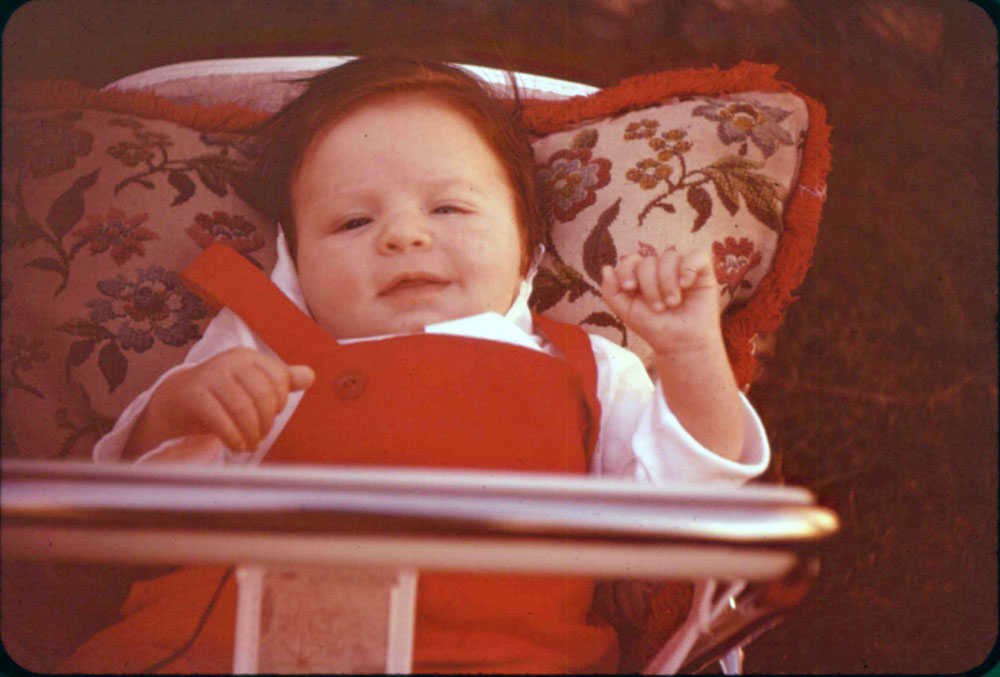
January 22, 1961
Daniel Dale Johnston is born
Daniel Dale Johnston was born in Sacramento, CA, to Bill and Mabel Johnston. (They lived nearby in Fair Oaks, CA) He was a late addition to the family, born 7 years after his nearest sibling, Dick. Throughout his life, Daniel repeatedly noted that he shared a birthday with Lewis Carroll (Alice in Wonderland), but he was mistaken. Lewis Carroll’s birthday was actually January 27th. His first word was “eye.” Or “I.” He always said that the two terms were interchangeable and that he meant both things. Dick told me he also had a security blanket when he was very young and would say “I want my eye/I!” In “A Year in My Garden” diary entries, Daniel often conflated the two words (as in “Eye want you, Eye love you, etc.”) “A Year in My Garden” is a sort of diary that each of the Johnston children wrote in, but that Daniel wrote in the most, by far. It’s also a great artifact of Daniel’s progress as a young artist. In particular, he drew Frankenstein repeatedly, getting better and better from year to year. Mabel monitored this diary and sometimes edited or censored entries that were not to her liking.
January 22, 1961
March 1, 1965
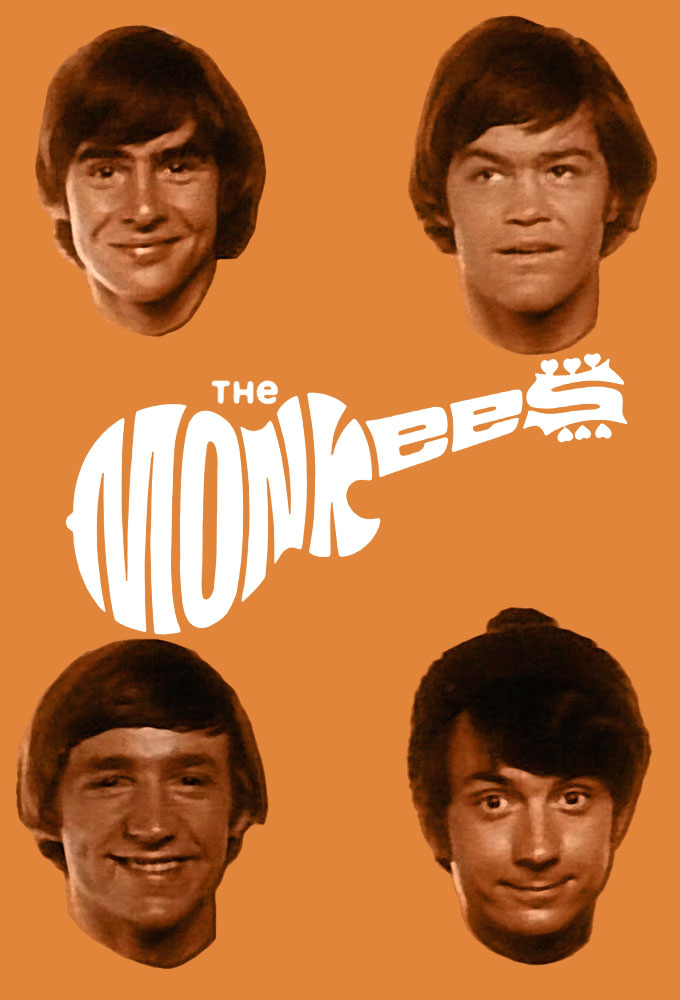
(Age 4) Daniel’s love of Rock begins with The Monkees
The only rock group Daniel knew about when he decided to start drawing, around age 4, was The Monkees. “And I still like The Monkees. I still listen to them.” This is notable as coincidental to the constant theme of and identification with ‘monkeys’ in Daniel’s later songwriting and notebooks. 1991 Harris Video Interviews Jeff Tartakov pointed out to me that The Monkees didn’t exist until Daniel was 5, so his memory is a bit off here. He was 4 ½ when they left Utah.
March 1, 1965

December 1, 1980
Songs of Pain (1980)
Songs of Pain is the first album by folk singer-songwriter Daniel Johnston, recorded on a simple tape recorder and released on Compact Cassette. Johnston recorded these songs in the basement of his parents’ house in West Virginia. Johnston recorded the tape between 1980 and 1981, and it was later mass produced on cassette by Stress Records in 1988, and on Compact Disc in 2003 by the label Dual Tone, together with More Songs of Pain as Early Recordings Volume 1. Background Songs of Pain was recorded between 1980 and 1981 during Daniel Johnston’s Freshman, Sophomore and Junior years studying at Kent State University in East Liverpool, Ohio. During this period, Johnston lived in his parents’ basement in West Virginia, where he would make recordings to share with friends and fellow students. In late 1979, Johnston wrote the song “Lazy”, the only song he wrote during that period after dropping out of Abilene Christian University in West Texas. In 1980, he enrolled in Kent State University in East Liverpool, Ohio, where he met Laurie Allen, who would become something of a muse for Johnston. Johnston had a crush on Allen and equated her with true love and all that was good with the world. He became romantically obsessed with her, and after being complimented on his piano playing by Allen, was inspired to take up piano playing as a daily routine alongside recording his work and compiling it onto cassettes to share with his peers. The material was recorded on a $59 Sanyo cassette recorder with Radio Shack tape stock. Johnston performed most of the instrumentation and overdubbed the vocals himself. Shortly after this, Allen relocated to Florida after her boyfriend, who was studying in Florida, graduated and became a mortician there. The departure left Johnston emotionally distraught. He saw Allen shortly afterward when he accompanied a friend to a funeral hosted at the home where she was employed. The awkward encounter which ensued inspired the song “Grievances,” written in early 1980 – which in November, he jokingly described as a “fluke.” In the Summer of 1980, Johnston wrote “Wicked World,” which he described as giving him more confidence in his songwriting. He was ‘lost in limbo land,’ writing music ’24 hours’ with lyrics devised by his friends. By the time the album was finished in 1981, Johnston was already in his Junior year of University. As he had no way of copying tapes at the time, each version featured a recording unique to the person to whom it was gifted. The later mass-copied version was given to musician/painter Kathy McCarty, who met Johnston circa 1985. This version was released in 1988 by Jeff Tartakov’s Stress Records. Sound All songs feature Johnston on vocals and piano, except for “Premarital Sex”, where he plays the organ. The opening track, “Grievances”, introduces themes that reoccur throughout Johnston’s career. He sings about his unrequited love for “the librarian”, which refers to a girl named Laurie Allen who has functioned as a muse in many of Johnston’s songs; this has been described as the quintessential Daniel Johnston song, including by Johnston himself. The lyrical and the musical themes of the song have been alluded to in later works, some examples include ‘Museum of Love’ which features an identical chord progression in its verses, as well as ‘Love Defined’, (From both The Lost Recordings and Yip/Jump Music) which features part of the same progression during the line ‘Love does not insist on its own way‘. The word “grievances” has also been reused in the song title “Don’t Let the Sun Go Down on Your Grievances“. Other themes on the album are premarital sex (“Joy Without Pleasure” and “Premarital Sex”), Christianity (“A Little Story”) and cannabis (“Pot Head”) – the latter of which was directed at a friend of Johnston’s. As a way to fuel his art, Johnston began to record every conversation he had, re-using phrases from these recordings as lyrics and, most notably, sampling confrontations between himself and his mother on the tapes. Bob Dylan was an influence on the album; Johnston described “Grievances” as his “Like a Rolling Stone,” took inspiration from the ‘Budokan‘ version of “I Want You” for the ‘high-piercing sound’ of “Urge,” and wrote “Hate Song” after being inspired by lyrics in the song “Dirge.” Another influence was Slim Whitman, who inspired “Wild West Virginia.” David Raposa for Pitchfork also noted an influence from The Kinks‘ “Lola” on the track “Wicked Will”, and Billboard Magazine compared ‘Urge’ to material by Plastic Ono Band, as well as “Joy Without Pleasure” to the ‘prim’ song-writing of Paul McCartney. Legacy In a 2003 review of the ‘Songs of Pain’ CD compilation (which collects both this album and its 1983 sequel ‘More Songs of Pain‘), David Raposa for Pitchfork discussed the album’s tracks positively, describing the material as ‘chilling,’ ‘jaunty’ and ‘happy-go-lucky.’ In Pitchfork’s 2010 review of ‘The Story of an Artist‘ (a six-disc collection of Johnston’s early material), Douglas Wolk described “Never Relaxed” as ‘The funniest thing that Johnston ever recorded,’ and ‘Living Life’ as ‘A bloodied but unbowed power-pop tune.’ Wolk also compared the album to ‘More Songs of Pain,’ which he called ‘A more accomplished if less bracing take on a lot of the same themes.’ On Billboard’s ’12 essential Daniel Johnston Tracks’ article, both ‘Urge’ and ‘Joy Without Pleasure’ were included. Willoughby Thom, writing for The Observer’s retrospective on Daniel Johnston, describes Songs of Pain favorably, calling it ‘Emotional and intensely beautiful,’ praising its sincerity, truth, and simplistic lyrics. In July 2021, the RO2 Gallery in Dallas, Texas, hosted an exhibition of Johnston’s art named after the album, ‘Story of an Artist & Songs of Pain’. In 2023, a 2xLP version of the album was released, featuring eight bonus tracks. Influence In Hi How Are You, a book written on Johnston’s career, Songs of Pain was listed as one of Kathy McCarty‘s most favored albums by the artist and she included five songs from the album on her 1994 tribute to Johnston, Dead Dog’s Eyeball. In 1995, her cover of “Living Life” was featured in the romantic drama film, Before Sunrise. Songs of Pain (1980) by Daniel Johnston
December 1, 1980
July 1, 1982
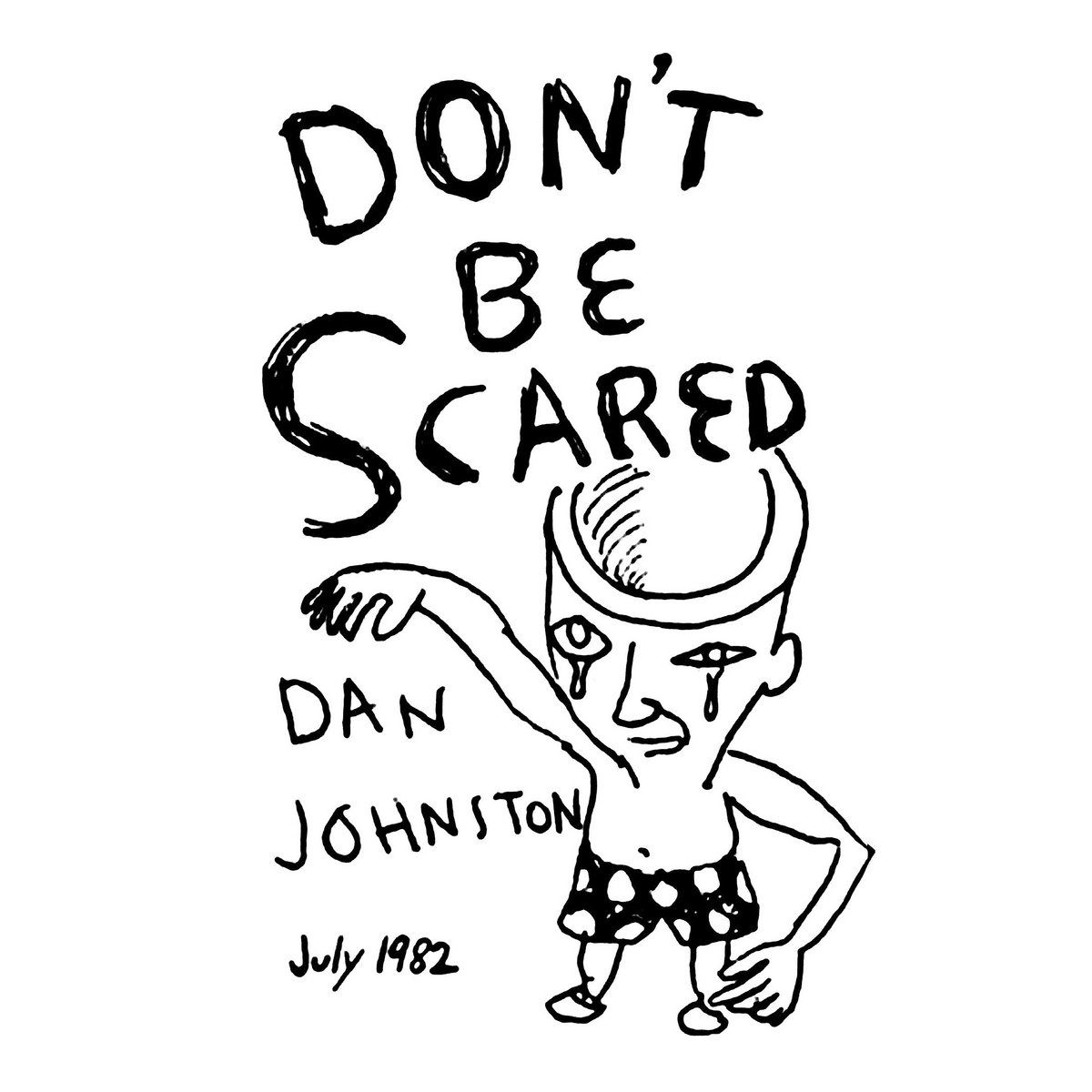
Don’t Be Scared (1982)
Don’t Be Scared is singer-songwriter Daniel Johnston‘s second self-released album, released in 1982. It was re-released on cassette in 1989 by Stress Records, a label run by Johnston’s friend and manager Jeff Tartakov, on mp3 by emusic.com in 2000, and on CDR by Eternal Yip Eye Music in 2004. “I Had Lost My Mind” features prominently in the 2005 documentary feature on Johnston’s life, The Devil and Daniel Johnston. The song was accompanied in the film by animation created from cels drawn by Johnston in a book that he had intended to submit to a local competition. Background The album was recorded in July 1982, during Johnston’s summer vacation between his sophomore and junior years studying at Kent State University. He was 21 at the time. As with the previous album, Songs of Pain, the recordings were made in his parents’ basement in West Virginia, where Johnston was living at the time. Initially, Johnston only produced one copy of this tape, until 1986 when Jeff Tartakov of Stress Records began distributing copies. Artwork The artwork is a drawing of Johnston’s ‘Polka Dot Underwear Guy’ character, with the top of his head removed. The exposed insides of his head represent Johnston’s inability to hold anything back artistically, ‘spilling forth embarrassingly personal expressions of vulnerability.’ The character was when Johnston was in high school, representing anybody ’embattled by life’, including Johnston. An evolution of the Polka Dot Underwear Guy, Joe The Boxer, later appeared on the cover of Retired Boxer. Legacy On Kathy McCarty‘s 1994 tribute album Dead Dog’s Eyeball, she featured two songs on Don’t Be Scared, “I Had A Dream” and “Going Down”. Sparklehorse recorded “My Yoke Is Heavy” for their 2000 EP Distorted Ghost. In 2004, M. Ward covered “Story of an Artist” and Guster “The Sun Shines Down on Me” on The Late Great Daniel Johnston. Two years later, Chris Harford covered the song “Going Down” on another tribute album titled I Killed The Monster. In 2013, Adrian Crowley and James Yorkston recorded a mini-album of Johnston covers titled after and featuring the song “My Yoke Is Heavy” as well as “The Sun Shines Down on Me”. Retrospectives on the album published decades following its release praised “The Story of an Artist” highly; the Tampa Bay Times called it “heartbreaking”, while The New Yorker referred to it as “haunting”. In 2017, a benefit concert by the Canadian Mental Health foundation was held in tribute to Daniel Johnston and was named after the album. When Douglas Wolk of Pitchfork reviewed Johnston’s first six albums as part of the “Story of an Artist” boxset, “Don’t Be Scared” was described as “lacking in quality control”, with Wolk calling “Stars on Parade” “plain awful” and the rest of the material “rather samey”, save for “The Story of An Artist”. Similarly, Trouser Press called the album a “disjointed, a muddy transliteration of some fine songs.” In March 2019, No-Comply Skateshop released a limited edition series of Vans shoes featuring Johnston’s artwork, including that of “Don’t Be Scared”. David Peisner, writing for The New York Times, included the song “The Story of An Artist” in his “12 essential Daniel Johnston tracks” article. Similarly, Willoughby Thom for The Observer had “The Sun Shines Down on Me” in their top five. For The Miscellany News‘s retrospective on Johnston, Abby Tarwater described this album (as well as Songs of Pain) as ‘strikingly lo-fi and achingly honest, balancing sunny, childlike pop songs with unfiltered musings on love and longing so agonizing that they’re often uncomfortable to listen to’. In 2021, the American mystery-comedy television show Only Murders in the Building included the album’s title track in its first episode. In May 2022, Vans produced a second shoe design featuring the album’s artwork in a collage with his other tapes. In May 2023, an exhibit of Johnston’s work hosted in Houston’s Redbud Gallery was named after the album. Don't Be Scared (1982) by Daniel Johnston
July 1, 1982

August 1, 1982
The What of Whom (1982)
Background The album was recorded in August 1982 between Johnston’s Junior and Senior years studying at Kent State University, East Liverpool, Ohio. The album, like Songs of Pain and Don’t Be Scared before it, was recorded in his parents’ basement in West Virginia, where the 21 year old Johnston was living at the time. A guest writer for Atwood Magazine noted influences from Elvis Costello and The Beatles (particularly early John Lennon) on the track ‘Man Obsessed.’ During this same time, Johnston recorded an unreleased tape known as ‘Ugly Music’ for his friend John Fair. The tape was largely made up of material written for Songs of Pain, but also included Don’t Be Scared and What of Whom songs, as well as 3 unreleased songs. Artwork The cover artwork is a drawing by Johnston of a woman’s torso, inspired by Venus de Milo and Venus of Willendorf. The torso represents sex and the objectified, mystified, and dehumanized way women are portrayed in his lyrics and artwork. Legacy In 2010, when Douglas Wolk reviewed the album for Pitchfork as part of the ‘Story of an Artist’ box-set, he described both it and Don’t Be Scared as ‘lacking in quality control.’ In the months following Johnston’s death, several retrospectives on his career were published. New York Times‘ ’12 essential Daniel Johnston tracks’ article written by David Peisner features the first two tracks from The What Of Whom . Atwood Magazine’s retrospective called Man Obsessed ‘A darkly comedic inversion of 60s beat era pop’. When reviewing the album. Alison Alber (writing for Mxdwn) mentioned the song as an example of Johnston’s lyrical talent. A 2023 exhibit of collage artwork by Daniel and his sister Marjory Johnston at the Street Gallery in Austin was titled after the album. Covers Several notable musical acts have covered material from the album, “To Go Home” has been covered by Groovie Ghoulies, M. Ward (on his Post-War album) and The Copyrights. “Blue Clouds” has been covered by Mercury Rev (for The Late Great Daniel Johnston tribute album) and Adam Stafford. “Man Obsessed” has been covered by “Weird Paul” Petroskey, and Built to Spill covered “Heart Mind and Soul” for their Daniel Johnston tribute album. The What of Whom (1982) by Daniel Johnston
August 1, 1982

December 1, 1982
More Songs of Pain (1982)
Background More Songs of Pain was Daniel Johnston’s final album recorded in his parents’ basement in West Virginia. During the sessions, Johnston was 21-22 and would have been studying for his Senior year at Kent State University in East Liverpool, Ohio, if he had not been taken out of education by his parents out of fear of him failing to graduate. The album is placed between The What of Whom (August 1982) and Yip/Jump Music (April 1983). The album introduces the recurring character of Joe, a stand-in for Johnston, ‘an average guy trying to defeat his demons.’ Joe would feature heavily in the lyrics to Hi, How Are You, and would appear on the cover of Retired Boxer. As well as having an improved sound quality than ‘Songs of Pain‘, ‘More’ also showcases Johnston becoming less self referential in his lyrics, with only ‘More Dead Than Alive‘ referring back to ‘Monkey in a Zoo’. Legacy In 2003, Jason MacNeil writing for PopMatters described Songs of Pain and More Songs of Pain as “Overall easy on the ears,” but said that Johnston’s “whiney vocals” could be “challenging at times”. He also compared the album to later acts such as They Might Be Giants and Ben Folds. MacNeil also considers “You Put My Love out the Door” as a highlight of the album, calling it “a melodic and somber mid-tempo tune where Johnston pours his heart out yet again about an old flame”, but criticized “Never Get To Heaven” as “ragged and average”. In 2006, Kimya Dawson covered “Follow That Dream” for the Daniel Johnston tribute album I Killed The Monster. In 2010, Douglas Wolk writing for Pitchfork described More Songs of Pain as “a accomplished if less bracing take on a lot of the same themes […as Songs of Pain]”. When Billboard published their “12 essential Daniel Johnston tracks” list in 2019, “Phantom of My Own Opera” was included. NBC News described More Songs of Pain and Johnston’s other 1983 albums as having “oblique, yet touching lyrics”, as well as “oddly contagious melodies”. More Songs of Pain (1982) by Daniel Johnston
December 1, 1982
January 1, 1983
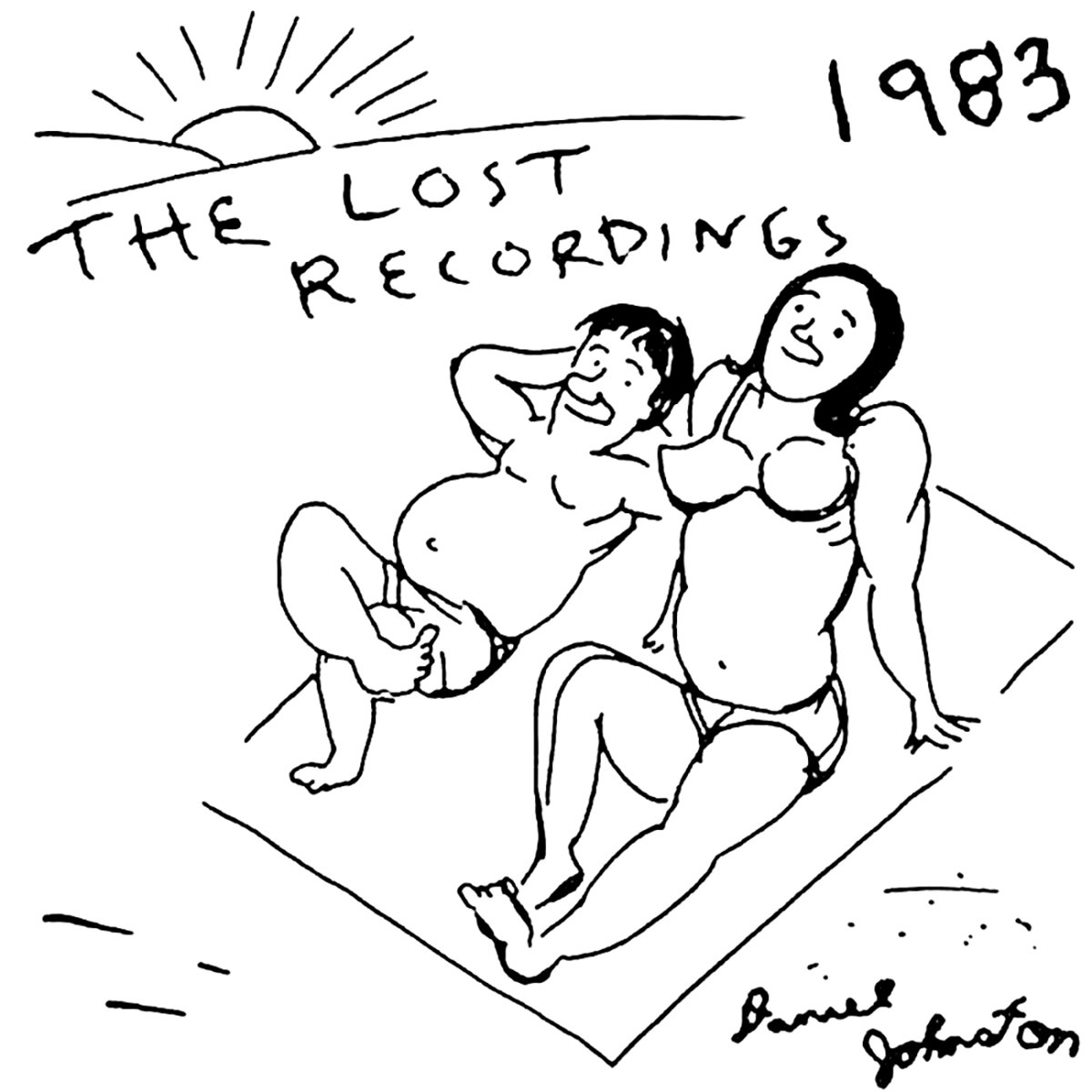
The Lost Recordings (1983)
Available for the very first time in 24bit lossless audio, each recording has been remastered from the original source tapes by Kramer (Shimmy-Disc founder and longtime collaborator of Daniel Johnston). 100% of profits go to the Daniel Johnston Estate for the purpose of securing his musical and artistic legacy. credits released January 1, 1983 These recordings were originally released on cassette by Stress Records in Austin, TX. The audio was sourced courtesy of Jeff Tartakov, Stress founder and Daniel’s manager between 1986-1993. The Lost Recordings (1983) by Daniel Johnston
January 1, 1983
January 2, 1983
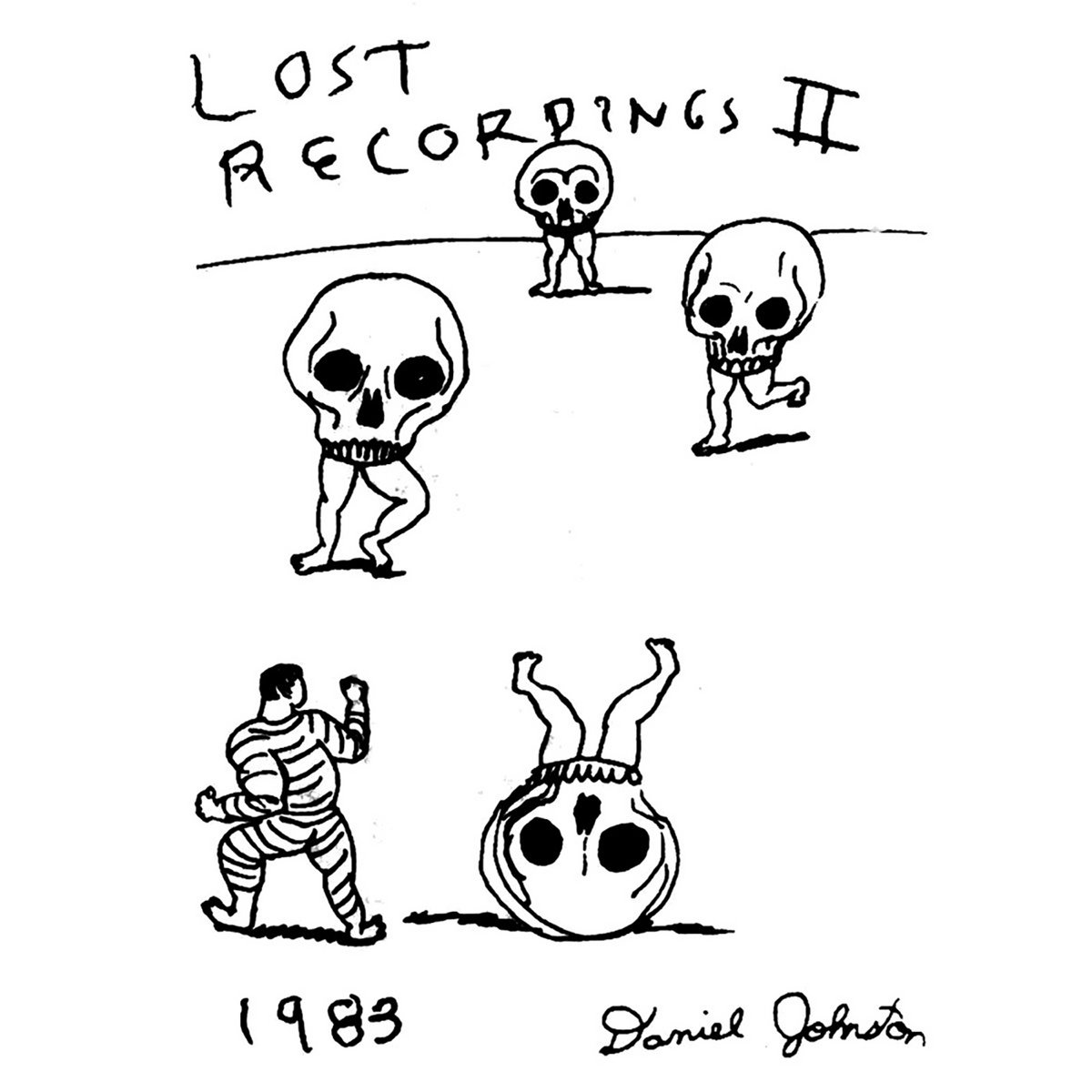
Lost Recordings II (1983)
Available for the very first time in 24bit lossless audio, each recording has been remastered from the original source tapes by Kramer (Shimmy-Disc founder and longtime collaborator of Daniel Johnston). 100% of profits go to the Daniel Johnston Estate for the purpose of securing his musical and artistic legacy. credits released January 2, 1983 These recordings were originally released on cassette by Stress Records in Austin, TX. The audio was sourced courtesy of Jeff Tartakov, Stress founder and Daniel’s manager between 1986-1993. Lost Recordings II (1983) by Daniel Johnston
January 2, 1983
August 1, 1983
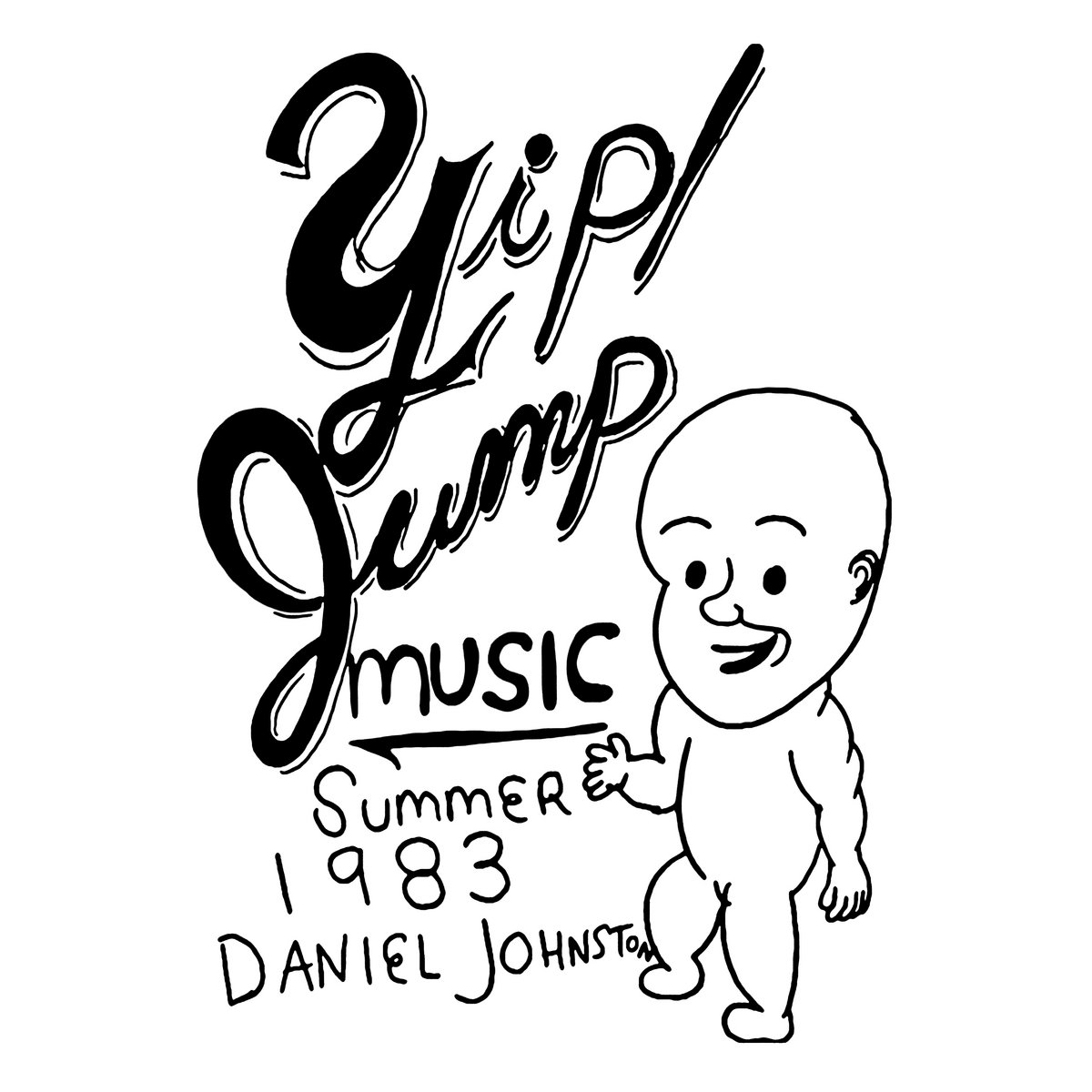
Yip Jump Music (1983)
Background In early 1983, Johnston’s family became increasingly concerned about his mental and emotional health. His brother Dick offered to have Daniel stay with him over the summer in his home in Houston, Texas while he worked at Astroworld. Until that point, Daniel had been living and recording in his parents’ home in West Virginia, and following the relocation, no longer had access to this piano heard throughout his earlier tapes. Johnston instead purchased a chord organ and converted his brother’s garage into a recording studio. Along with the chord organ, Johnston also performed tracks on a detuned ukulele, most noticeably on “Sorry Entertainer”, which concludes with Johnston strumming the instrument’s four strings. Yip/Jump Music was recorded throughout 1983, with sessions beginning in April and concluding before Hi, How Are You was recorded in September. According to the album’s liner notes, most of the material was written in May 1983, but a handful of songs originated a month prior in April. The latter songs include “Dead Lover’s Twisted Heart”, “Love Defined (The Bible)”, “Museum Of Love” and “I Remember Painfully”. An earlier version of “Love Defined” featuring piano can be found on the Lost Recordings collection. The album makes several references to Johnston’s relocation. Most notably in “Worried Shoes” and “Chord Organ Blues”. The latter opens with the line “Everything’s Big In Texas, you know it is / I think I might have made a big mistake”. Yip/Jump also features several pop culture references, with songs dedicated to The Beatles, Casper The Friendly Ghost, Danny Rapp, and King Kong, the latter of which Johnston used as a metaphor for heartache. Stylistically, the album uses typical progressions from rock and roll, doo-wop and religious hymns, with a definitive and notable influence from The Beatles. Legacy Johnston would later re-record ‘Casper’ for three separate albums, Continued Story (1985), Merry Christmas (1988), and It’s Spooky (1989), the latter of which is a studio take and appeared only as a bonus track on the CD edition. On Johnston’s online store, Yip/Jump is referred to as ‘The most popular Daniel Johnston album of all.’ In 1987, The Dead Milkmen would include a cover of “Rocket Ship” on their album Bucky Fellini. The following year, Johnston collaborators Jad Fair and Kramer recorded a version of “King Kong” for their album Roll Out The Barrel, featuring Kim Gordon and Thurston Moore. In 1989, Half Japanese, a group that featured both Fair and Kramer, recorded “I Live For Love” for their album The Band That Would Be King. In 1990, Yo La Tengo recorded a version of “Speeding Motorcycle” on their album Fakebook, and a year later, The Pastels recorded their version. By 1993, Kurt Cobain had included Yip/Jump Music at number 35 in his top 50 albums list, and The Bartlebees recorded a cover of “Casper The Friendly Ghost”. The following year Kathy McCarty released her Daniel Johnston tribute album, Dead Dog’s Eyeball, which featured four songs from Yip/Jump Music – “Rocket Ship”, “Sorry Entertainer”, “Museum of Love” and “The Creature”. That same year, Half Japanese included a cover of “King Kong” on their album BOO! Live In Europe 1992. In 1995, “Casper The Friendly Ghost” was featured in the cult film Kids, and Mary Lou Lord covered “Speeding Motorcycle” for her self-titled EP. Groovie Ghoulies covered “Love Defined” on a split 10 inch EP, released in 1999. On the 2004 album The Late Great Daniel Johnston, four selections from Yip/Jump Music were included: Clem Snide‘s version of “Don’t Let the Sun Go Down on Your Grievances”, Calvin Johnson‘s “Sorry Entertainer”, Starlight Mints‘ “Dead Lover’s Twisted Heart” and Tom Waits‘ “King Kong”. Waits also included the latter on his 2006 album Orphans: Brawlers, Bawlers & Bastards. In 2005, Kathy McCarty released an extended version of “Dead Dogs Eyeball”, featuring an abridged version of “Worried Shoes”. In 2006, Robert Deeble covered “Speeding Motorcycle” and the tribute album I Killed The Monster was released, featuring Dot Allison performing “Don’t Let The Sun Go Down On Your Grievances” and Sufjan Stevens‘ “Worried Shoes”. In 2008, B. Fleischmann covered “King Kong” on his album Angst Is Not A Weltanschauung!. When NME reviewed the album in 2009, they awarded it 8/10 stars, simply saying, “Despite – possibly because – of their simple renderings, the songs shine”. The song “Worried Shoes” was also featured in the movie Where The Wild Things Are, performed by Karen O. Her version of “Worried Shoes” also featured in the 2009 film Tell Them Anything You Want: A Portrait of Maurice Sendak. Mike Doughty covered “Casper the Friendly Ghost” on his album Sad Man Happy Man. In 2012, M. Ward covered “Sweetheart” on his album A Wasteland Companion. The following year, Adrian Crowley and James Yorkston recorded a cover of “Don’t Let The Sun Go Down On Your Grievances” for their Johnston tribute mini-album, My Yoke Is Heavy. In 2014 The Unicorns released their cover of “Rocket Ship” as a bonus track from their 2003 album Who Will Cut Our Hair When We’re Gone?. Shortly following Johnston’s death, The Irish Times published a retrospective on the artist; the article described his music as “The Beatles as being sung with sincerity and intensity […] that the cliches take on a real emotional power”. In November 2019, Ben Lee released his cover of “Speeding Motorcycle” on his album Quarter Century Classix. In June 2021, the album was reviewed by Fruzsina Vida for The New Yorker; Vida described it as “a unique and often bizarre spin on these old themes [loneliness and unrequited love], reducing them to an almost childlike interpretation, rendering his songs rare and untouched by clichés”. She also commented on the production style, saying that on first listen it was distracting, “as Johnston seemingly milks his trademark DIY aesthetic for all it’s worth”. The following month, American singer-songwriter Sasami released a cover of “Sorry Entertainer”, similar in length to Calvin Johnson’s version, and in style to Kathy McCarty’s rock version. Yip Jump Music (1983) by Daniel Johnston
August 1, 1983
September 1, 1983
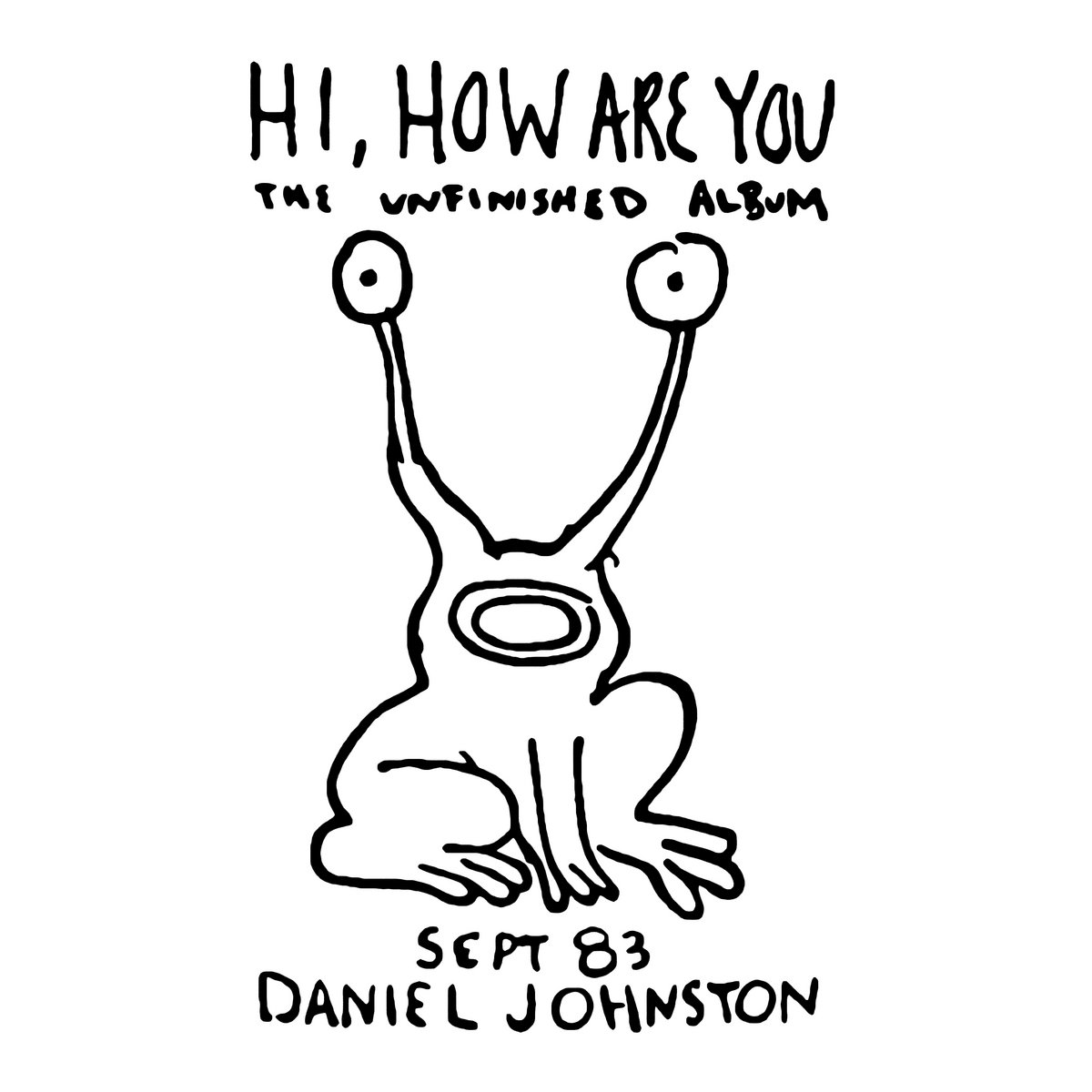
Hi, How Are You (1983)
Recording On September 1, 1983, Daniel Johnston was evicted from his brother Dick’s home in Houston, Texas. Daniel had been living with Dick throughout the summer and recorded his previous album Yip/Jump Music in the garage. Following his eviction, Margie Johnston, his sister, let Daniel live with her in her San Marcos home, where he worked in pizza delivery. Margie did not have any extra furniture for Daniel, so they bought a mattress which was placed on a floor for him to sleep on. Margie notes that Daniel thrived in this environment because he was allowed to make a mess. The backing music to the song “Desperate Man Blues” comes from a song by Johnny Dankworth titled “Desperate Dan” from the album England’s Ambassador of Jazz, which Johnston owned. The track resonated heavily with Johnston, leading to its inclusion on the album. The album is one of the most sonically varied of Johnston’s early output. While earlier records found him focusing on piano or chord organ songs almost exclusively, this album blends both approaches along with experiments in tape and noise collage, and some tentative playing on a stringed instrument, referred to as a guitar, a toy guitar, or a ukulele. Artwork / title The album’s artwork is a sketch of “Jeremiah the Frog of Innosense [sic]”, a character created by Johnston inspired by an old rubber stamp box he discovered while working at AstroWorld that previous summer. The box featured a picture of a frog along with the text “Hi, How Are You?”. Johnston became inspired by the phrase and remembered that he had previously used it in his song “Grievances”, from Songs of Pain. And I saw you at the funeral, you were standing there like a temple I said, “Hi, how are you? Hello” And I pulled up a casket and crawled in Since he had already called back to “Grievances” countless times throughout his previous tapes, he felt it was only appropriate to continue to use the phrase as yet another call-back. “Jeremiah”, the frog’s name, was taken from the song “Joy to the World” by Three Dog Night, which opens with the lyric, “Jeremiah was a bullfrog”. Promotion Daniel would promote the album through handing out copies to people he met. One individual given a copy of the album was Kathy McCarty, who said, “That weird kid is probably the only genius I’ve met in my life!” This was the first Daniel Johnston album to be given a widely distributed release as a vinyl LP; it was released on Homestead Records in 1988. Legacy In the 1988 Richard Linklater film It’s Impossible to Learn to Plow by Reading Books, the unnamed main character is handed a tape by another unnamed character, played by Johnston. In the next scene, the main character listens to snippets of the album in his apartment. In 1988, when the album was pressed on LP by Homestead Records, Mark Lerario for the Reading Eagle said that it sounded like “A basement tape haphazardly put together by deaf hippies.” The song “Big Business Monkey” appeared in the soundtrack of the 1990 film Slacker. By 1992, Kurt Cobain began wearing a T-shirt of the album’s cover, launching Johnston into mainstream popularity. Two years later, in 1994, Kathy McCarty released her Johnston tribute album, which featured five tracks from Hi How Are You. In 2006, Ty Burr Globe for the Record-Journal described “Walking the Cow” as “demented and heartbreakingly fragile”. In 2009, the song “Desperate Man Blues” was included in the play Punk Rock. A 2015 documentary about Johnston, titled Hi, How Are You Daniel Johnston?, was named after the record. In 2018, the Mayor of Austin, Texas, declared January 22 (Johnston’s birthday) to be “Hi, How Are You Day”, a day dedicated to mental health awareness funded by the non-profit organisation of the same name. In 2019, American post-disco duo De Lux released a cover of “Get Yourself Together”. On April 9, 2021, the Johnston estate announced an NFT based on the album’s cover. A mural of the album cover was painted near the Drag by the University of Texas at Austin. In 2024, the surrounding building was demolished but the mural was preserved. Hi, How Are You (1983) by Daniel Johnston
September 1, 1983
December 1, 1984
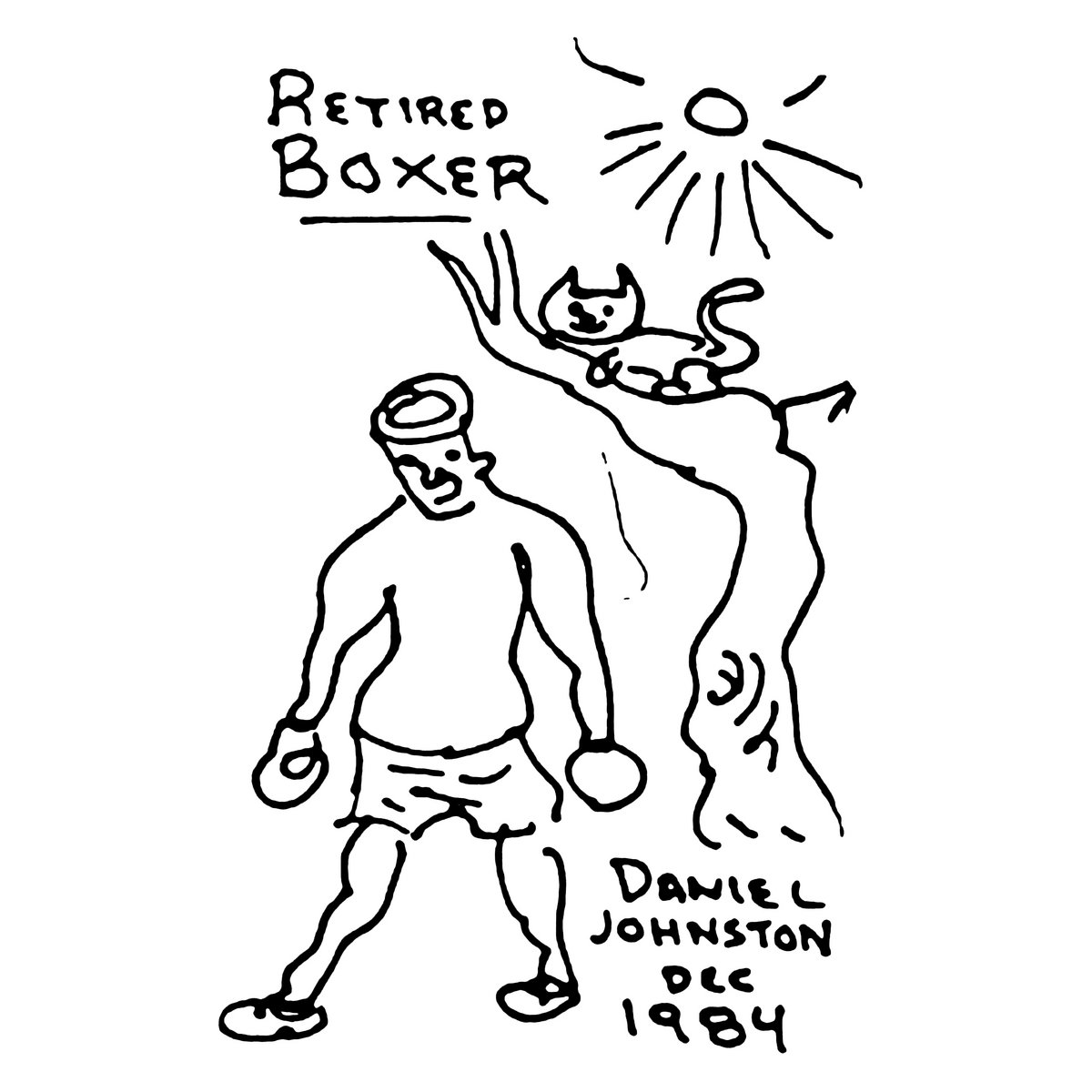
Retired Boxer (1984)
Background Retired Boxer was Johnston’s first album recorded in Austin, Texas, a location where he found much success. During the recording of ‘Hi, How Are You‘ the previous year, Johnston was living with his sister Margie but disappeared in April 1984 after his mother suggested institutionalizing him. He only told his parents where he was on Fathers Day of that year. He had purchased a moped and rode it to the local carnival where he began working at the Corn Dog Stand. Six months later, when the carnival arrived in Austin, Johnston had upset someone with how long he was taking on the porta-potty, which resulted in Johnston being punched. The assault left Johnston badly hurt, and he began searching for a nearby Church for help, before eventually arriving at the Austin University Church of Christ. The staff there took Johnston to a doctor and leased him an apartment. Whilst in Austin, Johnston also began working at McDonalds. His assault is referenced in the song ‘Bye-Bye Barbie’, with the lyric ‘A knock in the skull sure changes a man’. Most of the album features Johnston playing the piano, save for the final track, ‘True Love Will Find You In The End’, where he plays acoustic guitar. Johnston was influenced to start playing the guitar by the legacy of Austin-based guitar players. Artwork / Title The album’s artwork features Johnston’s character of Joe The Boxer, who was featured heavily in the lyrics to ‘Hi, How Are You’. The title came after Johnston got a concussion in a fight at the carnival. He had considered himself tough beforehand but realized he was not. As a result, he decided to name the album ‘Retired Boxer.’ Promotion As had been done with ‘Hi, How Are You‘, Johnston began to give away copies of Retired Boxer to anyone he could. Since he was now living in Austin, these often ended up in the hands of influential figures in the local music scene, such as Louis Black of the Austin Chronicle, who was also given copies of Hi, How Are You, and Yip/Jump Music. Black began playing the material for other music writers as well as musicians, whilst Johnston himself continued to hand out copies, inciting a local interest. Legacy “True Love Will Find You in the End” has been covered by countless artists, including Headless Heroes, Wilco, Beck, Richard Walters, Spectrum, Mates of State, Spiritualised, Steve Harley, The Legendary Tigerman with Cibelle, Elizabeth & the Catapult, A Whisper in the Noise, Svavar Knútur, Fritz Ostermayer, Kevin Blechdom, Noël Akchoté & Brad Jones, Milky Wimpshake & Tape Deck Mountain and Shakey Graves & Jess Williamson. Whilst some covers, like Jad Fair & Kramer‘s, Mathew Good‘s, Adrian Crowley & James Yorkston‘s and Kate Davis‘, retain the original 2 minute structure of the song, it’s more common for artists to expand upon the original either through a slower tempo or repeated sections. Johnston’s original “True Love Will Find You in the End” was used in a 2012 commercial for Axe men’s hair care product. Kathy McCarty recorded a cover of ‘Oh No’ for her Dead Dogs Eyeball cover album. As a benefit for the mental health charity Hi How Are You Project, American singer-bassist Kate Davis released her own re-recording of the album, titled Strange Boy, which was released on January 29, 2021, with “Oh No” acting as the album’s lead single, released to SoundCloud in November 2020. Davis’ appreciation for the album comes from the DIY aspects of it as well as its lyrical themes, saying Johnston’s music was ‘complete, while leaving room for you to take it wherever you want it to go’. Johnston’s death, which took place during production of the album, was influential on her performance of it, in particular for the song ‘Too Young To Die’, which was also dedicated to her deceased father. Retired Boxer (1984) by Daniel Johnston
December 1, 1984
January 1, 1985
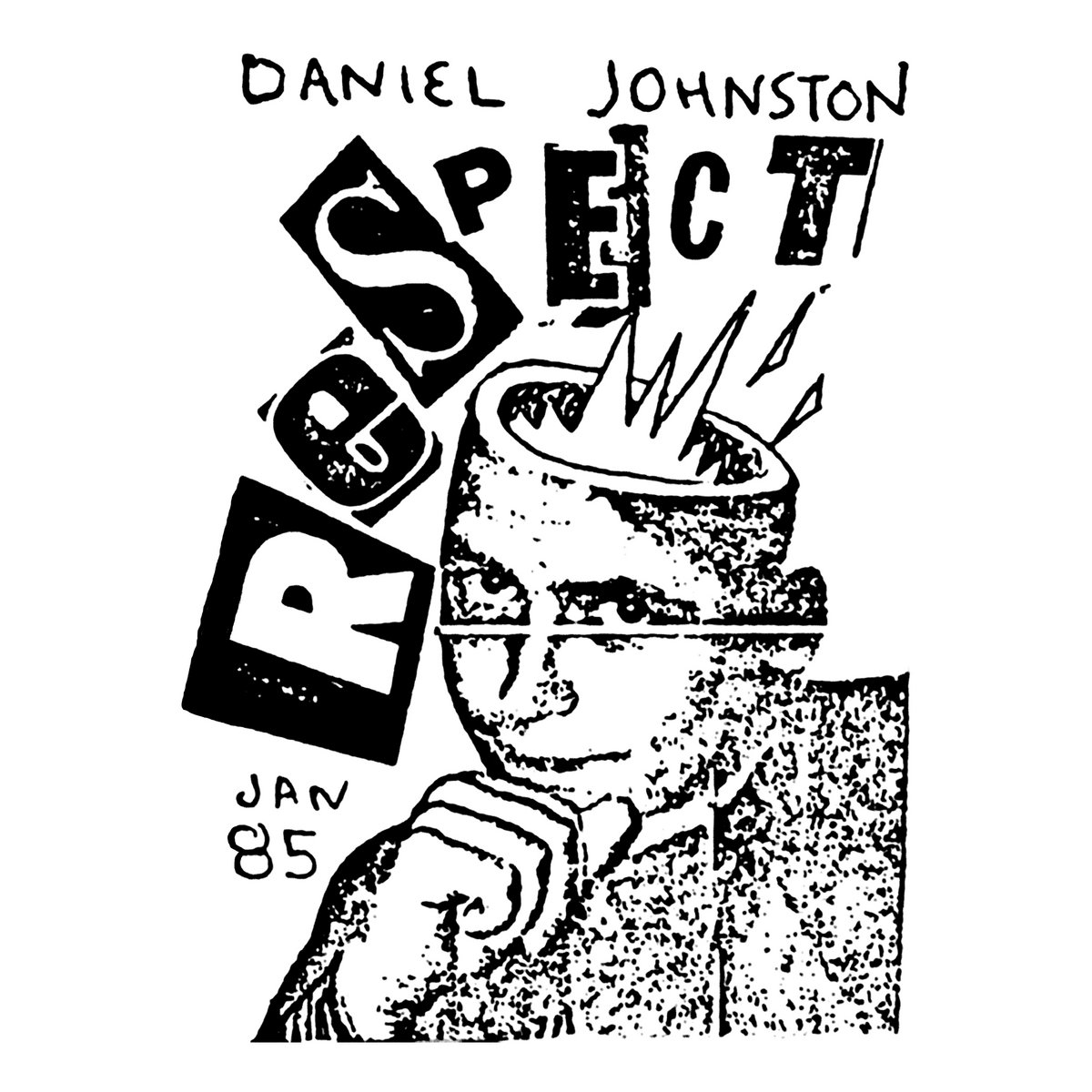
Respect (1985)
Background Since it was recorded only one month following his last album, the context surrounding ‘Respect’ is essentially the same as that of Johnston’s ‘Retired Boxer‘ album. Johnston recorded both albums whilst living in an apartment leased to him by a local church in Austin, Texas. During recording, Johnston steadily amassed a local following as he gifted copies of his albums to anyone who would take them. Johnston also began playing acoustic guitar during this time, inspired by the Austin-based guitarists. In the documentary “The Devil and Daniel Johnston“, tapes dated January 3 – 5 1985 are shown during playback of Johnston describing symptoms of Manic Depression, suggesting the Johnston had been recently diagnosed at that time, although the lyrics to ‘Keep Punching Joe’ from Hi, How Are You make direct reference to manic depression. The album also features Johnston turning to a shorter song-writing format; while most songs on ‘Retired Boxer’ had been over 3 minutes, Respect is primarily made up of shorter tracks averaging around 1–2 minutes. It also features two covers, a Bert Berns song ‘A Little Bit Of Soap‘ and ‘Heartbreak Hotel’, by Elvis Presley, both of which influenced the album’s sound direction. Promotion In 1985, Johnston began to perform live in concert, firstly opening for the local band Glass Eye. After this he continued to perform sporadic 2 – 3 song sets in local clubs, including a June 29, performance at Woodshock 85, as well as a televised single song performance on the MTV program ‘The Cutting Edge‘ filmed on August 24. Legacy In 2004, two songs from ‘Respect’ were included on the official tribute album ‘The Late Great Daniel Johnston‘, ‘Good Morning You’ by The Rabbit, and ‘Go’ by Sparklehorse with The Flaming Lips. In 2020, Built To Spill, who had performed as Daniel Johnston’s backing band in 2017, also included ‘Good Morning You’ on their album Built to Spill Plays the Songs of Daniel Johnston. Respect (1985) by Daniel Johnston
January 1, 1985
December 1, 1985
Continued Story (1985)
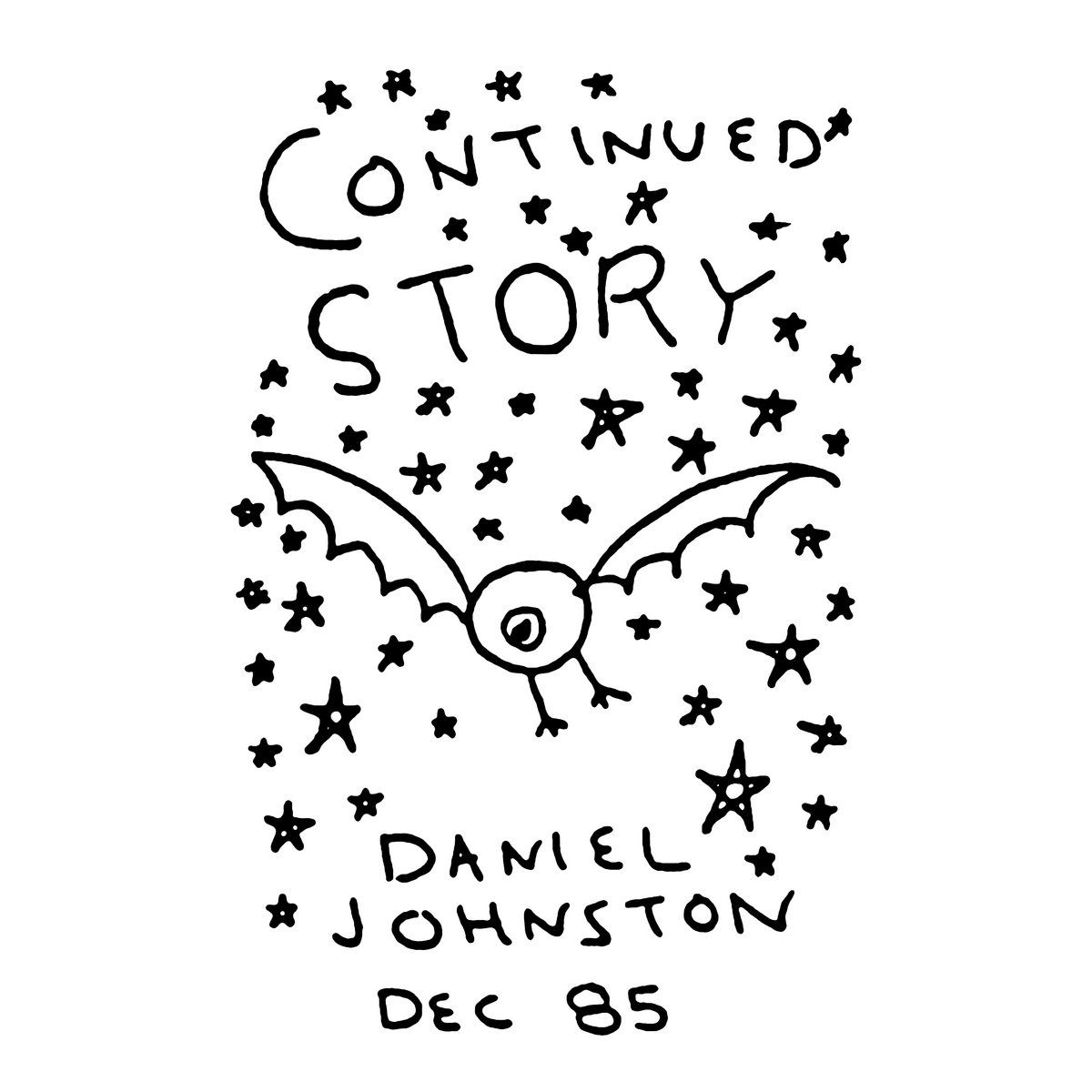
Background In the eleven months between the recording of Retired Boxer and Continued Story, Daniel Johnston had been expanding his reach with local live performances in Austin, Texas. appearing at the Woodshock 85 festival with The Texas Instruments and on the MTV program The Cutting Edge. These appearances featured Johnston performing newly written non-album material such as ‘I Live My Broken Dreams’ and ‘The Marching Guitars‘. About a month following his appearance on MTV in August, Johnston stopped playing live shows; a decision referenced in the track ‘Running Water Revisited.’ During this period, Johnston was still working at McDonald’s. The managers there were aware of Johnston’s popularity and were amused by it, so they expanded his weekly hours to 20 or 30. Additionally, Johnston didn’t have a phone, and so the only way to contact him was through McDonald’s, which eventually became an irritation for management. Recording Thanks to the publicity he was getting, Johnston attracted the attention of producer Kim Fowley, who was interested to hear what he would sound like in a studio environment. Fowley had organized for The Texas Instruments to act as Johnston’s backing band and paid for the sessions but was largely uninvolved, only entering the studio on one occasion. Joe Johnson produced ten of the album’s tracks at Europa Studios, with four additional tracks recorded elsewhere by either Johnston himself or Pam Peltz. The album also features two other guest performers, Bill Anderson, who co-wrote two of its tracks, and Rick Morgan, who appears only on ‘It’s Over.’ Johnston was pleased with the initial recordings but was shocked by the creative control Fowley had demanded afterward. According to Johnston, Fowley wanted more of Johnston’s earlier material to be re-recorded, this time with additional saxophones. When Fowley heard the finished album, he was disappointed and said that the songs sounded ‘unfinished.’ He also wanted Johnston to sign a contract that would have given Fowley full ownership over the masters, songwriting credit, and 50% publishing rights. Johnston refused the deal, and Jeff Tartakov, his manager at the time, obtained ownership of the album on Johnston’s behalf, leading to Johnston’s self-released version. Sonically, the album showcases a more rock-oriented sound than that found in Johnston’s earlier music, and is particularly stylized in the indie rock or pop-rock styles. Additionally, clear influences on the album include pop from the 1920s – 1930s, as well as the music of Lennon/McCartney. Also included on the album are re-recorded versions of two tracks featured on two of Johnston’s self-produced 1983 tapes, ‘Running Water’ from ‘Hi How Are You‘ and ‘Casper’ from ‘Yip/Jump Music‘; however, neither of the re-recordings took place at Europa Studios. Continued Story marks the end of an incredibly productive era for Johnston; between 1981 and 1985, Daniel had recorded nine albums but would not make his next until three years later. Artwork The album’s artwork depicts a “Fly Eye”,’ a Johnston invention representing supernatural watchfulness. Johnston’s other drawings of the Fly Eyes depict them as either comforting or sinister, watching over the world’s every move, with Johnston referring to them as “Good/Evil”. In the song “Fly Eye”, Johnston attempts to calm one, in order to transform it into a less ominous constant companion. Legacy A live recording of ‘Funeral Home’ would be included on Daniel Johnston’s ‘1990‘ album. The ‘1990’ version is triple the length of the studio take. In 1993, The Fellow Travellers recorded a cover of ‘It’s Over’ for ‘A Tribute To Daniel Johnston Vol. 2‘, and the year afterwards, Kathy McCarty included the song as the final track on her ‘Dead Dog’s Eyeball’ album; which is made up entirely of Daniel Johnston covers. In 2004, John Wayne Shot Me recorded a cover of ‘Funeral Home’ for their EP ‘Let Sleeping Monsters Sleep.’ Singer-songwriter Beabadoobee revealed in a 2019 interview that she has a tattoo of the album’s artwork, and in 2021, the Johnston estate released an NFT based on Daniel’s Hi How Are You artwork featuring an instrumental excerpt from the track ‘Fly Eye’. Continued Story (1985) by Daniel Johnston
December 1, 1985
December 1, 1988
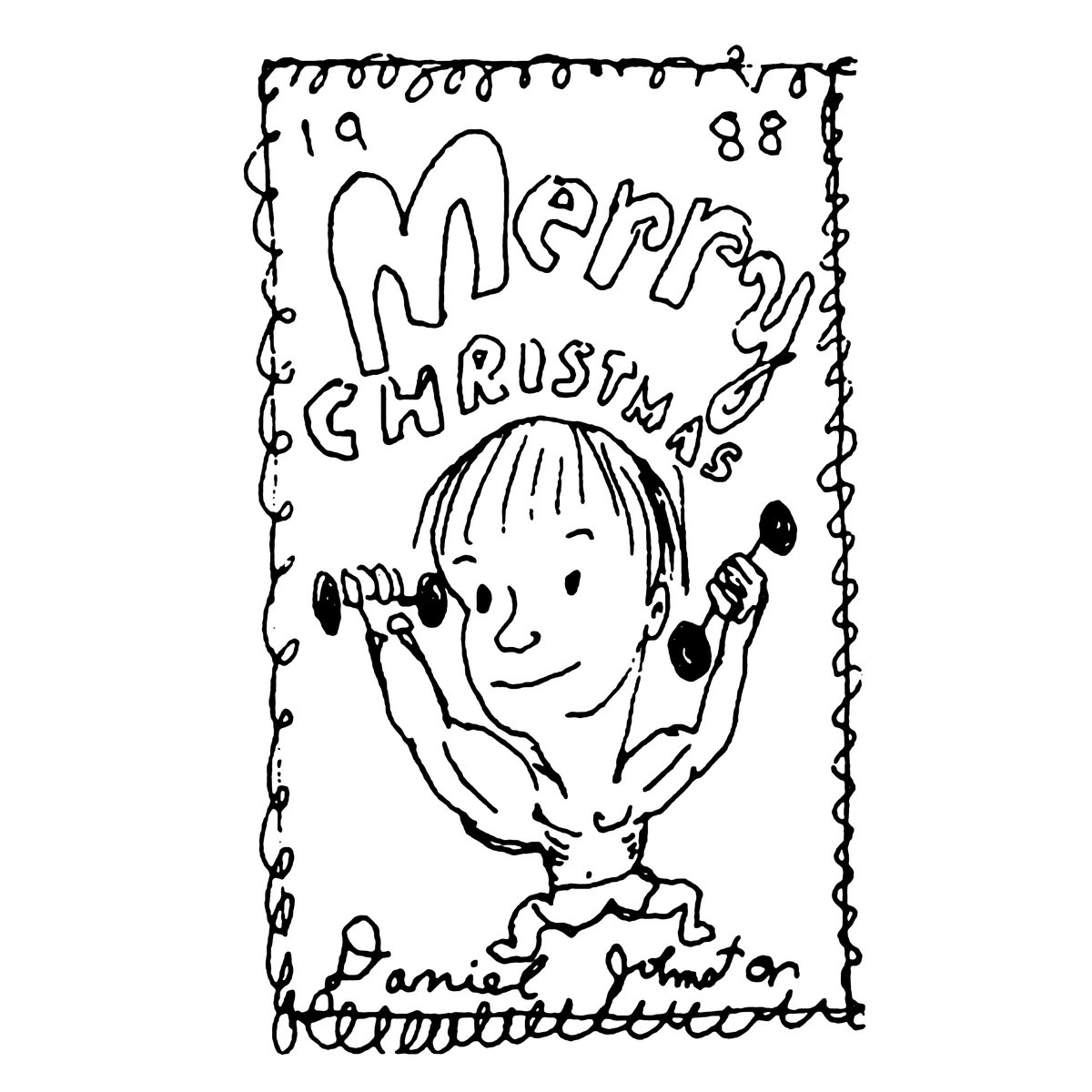
Merry Christmas (1988)
Background Merry Christmas was released three years following Johnston’s last album, Continued Story. The period between Continued Story and Merry Christmas was one of increasing mental de-stability for Johnston, ultimately leading to his institutionalisation in August 1988. In early 1986, Johnston won two awards in the Austin Chronicle, ‘best songwriter’ and ‘best folk act.’ Shortly afterwards, in the spring, Jeff Tartakov set up his publishing company. Meanwhile, Johnston had been dating Kathy McCarty, but the two had broken up by June. Stress Records also began re-releasing Johnston’s material at this time. At this same time, Johnston had been spending a lot of time with his manager, Randy Kemper, smoking excessive amounts of marijuana and refusing to perform live; people also began noticing changes in his behaviour but were unsure what to do. Johnston later referred to Kemper as his best friend. On September 11, 1986, Johnston attended a Butthole Surfers concert and was given acid. By December, Johnston was using the drug regularly and became more violent and delusional, resulting in an attack on Kemper, who was hospitalised after Johnston hit him over the head three times with a lead pipe. During this time, Johnston began to see himself in the biblical figure Daniel, who Johnston cited as ‘a dreamer and interpreter of visions’, leading him to believe that his delusions were visions from God. By Christmas 1986, Johnston and his siblings reunited in Texas; whilst together, Johnston began acting strangely, placing a black number 9 and a Beatles LP on the Christmas tree. His brother Dick attempted to take the album down and was attacked by Daniel, who broke Dick’s rib. Johnston began speaking in different voices and accused his siblings of teaching their children Satanist practices. Johnston then rushed up to the attic where his sibling’s children were playing. Sally Johnston then called the police and had Daniel removed from the house. Shortly afterwards, Louis Black found Johnston at The University of Texas at Austin, where he preached in a river before being forcibly removed by the police. He later said he had been having suicidal thoughts only a few nights before and believed that a military takeover would take place over the holidays. Following this, Johnston was institutionalised for the first time but was released by Jeff Tartakov, who self-admittedly didn’t know why Johnston was there. He then began acting as Johnston’s manager. Tartakov got Johnston back to his apartment and noted that everything seemed okay, at least at a borderline level, although Johnston had become more obsessed with The Devil as well as the number 9. Over the next few days, Johnston began to throw away all his possessions, including drawings and master tapes. The last time Tartakov visited Johnston’s apartment; he only had his tape deck and guitar. Tartakov began to fear that Johnston would kill himself and called his father, who arrived in Austin within 24 hours. Daniel returned to West Virginia and announced his retirement. Throughout 1987, Johnston was heavily medicated, finding himself often unable to leave his bed or write songs. He was psychologically examined at The University of Pittsburgh, and it was discovered that Johnston was on the wrong medicine. Johnston was prescribed many different types and reacted differently to all. He referred to 1987 as his ‘lost year.’ At the same time, Jeff Tartakov attempted to expand Johnston’s relationships with other contemporary musical acts, such as Jad Fair of Half Japanese and Steve Shelly of Sonic Youth. That year an early version of ‘Don’t Play Cards With Satan’ featured on the Butthole Surfers produced album ‘A Texas Trip’. It features an entirely different instrumental. In April 1988, Shelly invited Johnston to meet him in New York City. He recorded at Noise Studios with Shelly and Lee Ranaldo, met producer Kramer and recorded with Moe Tucker. He also met with Jad Fair, and the two wrote the ‘Do it Right’. During this trip, Johnston performed a 20-minute set at Pier Platters in Hoboken, New Jersey. Jeff Tartakov called the show bizarre, as it featured Johnston chastising the audience and ‘forcing his religious beliefs on them. After the show, Daniel and Shelly had a falling out leading to Shelly threatening to call Daniel’s parents. Fearing that his parents wanted to institutionalise him again, Johnston disappeared, leading Sonic Youth, who had been with Johnston, to search for him. They eventually found him in a hotel parking lot, but he was still refusing to go home, insisting he was on a mission from God and needed to stay for two more weeks. He believed that Satan was trying to stop him from leaving the town and ended up staying in the bowery, where he was assaulted and had his suitcase stolen. Eventually, some friends bought him a bus ticket to go back home and thought they saw him leave, but two days later he was seen back in New York. On April 22, he was admitted into a mental hospital in Bellevue, before being released due to a clerical error and opening for Firehose at CBGB’s that same night. Johnston performed ‘Don’t Play Cards with Satan’ at this gig. He was eventually returned home to West Virginia, with a greatly increased reputation due to his New York hijinks. The album 1990 was created using audio recordings from this month, and includes alternate recordings of ‘Held The Hand’, ‘Don’t Play Cards With Satan’ and ‘Lord, Give Me Hope.’ In August, Johnston and Fair re-united in Uniontown, Maryland, to record the album ‘It’s Spooky‘. During this period Johnston was dressed in all white, believing that it was the Christian thing to do. On the CD issue of that album, the track ‘Casper The Friendly Ghost’ featured is the same recording as that featured on Merry Christmas. At the time Johnston was not taking his medication. On his way home, he got off the bus too soon. He became delusional and believed everyone around him had been possessed. Whilst he was making noise in the street, an elderly woman came to her window to tell him to be quiet. He began to pound at her door, terrifying the lady and causing her to jump out of her second-story window; leading her to break both of her ankles. Johnston was arrested and institutionalised …
December 1, 1988
January 1, 1990
1990 (1990)
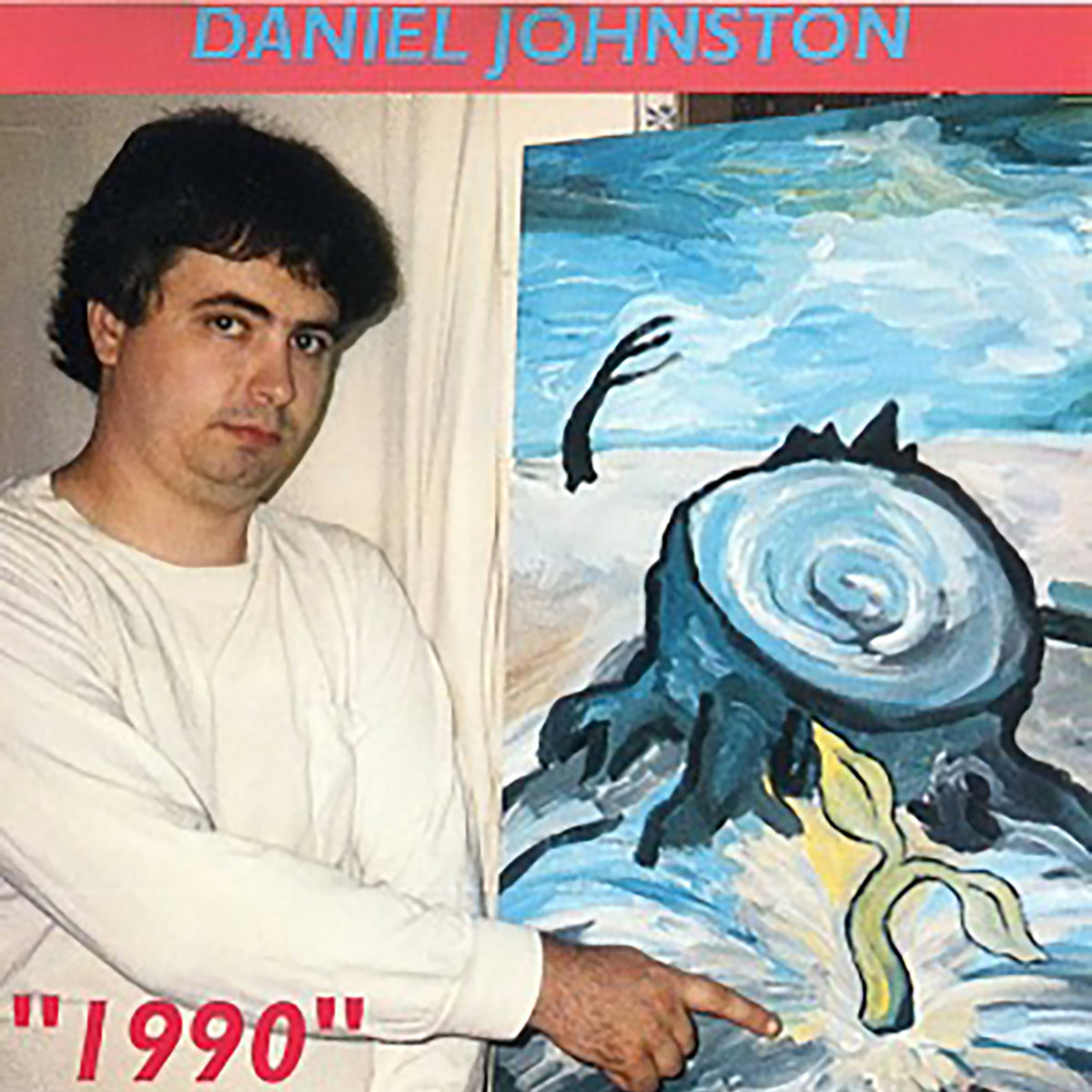
Writing Daniel Johnston wrote the album over four years between 1984 and 1988. The song “True Love Will Find You in the End” is possibly the earliest and had initially appeared on Johnston’s December ’84 demo tape Retired Boxer. In December 1985, an earlier version of “Funeral Home” appeared on his Continued Story album; later, in 1987, Johnston released an early version of “Don’t Play Cards with Satan” on A Texas Trip. Johnston had spent the entirety of 1987 living in West Virginia with his parents; he was heavily medicated after a severe mental breakdown in December 1986 and found himself unable to write new material. The track “Some Things Last a Long Time” was co-written with Jad Fair, who Johnston first met in April 1988. Home demo versions of the songs “Held the Hand”, “Don’t Play Cards with Satan”, and “Lord Give Me Hope” appeared on Johnston’s Merry Christmas tape, released in December 1988. 1990 also features a cover of the Paul McCartney composition “Got to Get You into My Life” (credited to Lennon/McCartney.) McCartney stated he had written the song about marijuana, which had been earlier covered in Johnston’s song “Pot-Head” on Songs of Pain. Johnston had been regularly smoking marijuana with his then manager before his mental breakdown in 1986. Recording 1990 is made up entirely of recordings made during Johnston’s April 1988 visit to New York City. During 1987 (his ‘lost year’), Johnston’s then-manager Jeff Tartakov was busy expanding Johnston’s relationships with other contemporary acts, such as Jad Fair and Sonic Youth. Eventually, Johnston was invited by Steve Shelley of Sonic Youth to visit New York and do some recordings. In New York, Johnston first met with Jad Fair who co-wrote the track “Some Things Last a Long Time” and would later record the album It’s Spooky with Johnston. While in New York, Johnston recorded at Noise New York Studios during sessions produced by Kramer. Tracks 1–5 and 8 were recorded during these sessions. Whilst at Noise New York, Johnston recorded with Moe Tucker and appeared on two tracks of her second album, Life in Exile After Abdication. The visit was supposed to last for less than a week, with Johnston performing a handful of concerts to promote himself between the 15th and 18th, but Johnston remained in New York for twice that amount of time. Once he arrived there, he stopped taking his medication, which led to his increasingly erratic behavior. The start of his unstable behavior was an arrest at the Statue of Liberty, where he was caught drawing Ichthys in the stairwell. Shortly afterward, on April 15, Johnston performed a 20-minute gig at Pier Platters in Hoboken, New Jersey. The show saw Johnston performing largely unreleased material, including “Spirit World Rising,” the album version of which was recorded at Noise New York. The final six minutes of the concert, during which Johnston performs “Careless Soul” and “Funeral Home,” from his Continued Story album, were included on 1990. Tartakov later said that Johnston was “proselytizing” the audience throughout the concert through religious monologues. The concert had led those around Johnston to believe that things were getting out of control and that he needed to be returned home. Shelley threatened to call Johnston’s parents, which caused a fight between the two. Johnston was afraid he would be institutionalized again and so ran away. Along with the rest of Sonic Youth, Shelley eventually found Johnston in a hotel parking lot and attempted to convince him to return home. But Johnston was confident he was on a mission from God and had to stay in New York. After this, Shelley, who Johnston had been staying with up until that point, asked Kramer to look after him for a few days, but after a few days together, Johnston attempted to return to Shelley. He was found by Kramer a few days later being thrown out of a hotel room. The next day Lee Ranaldo found him at a men’s shelter in the Bowery, where Johnston was assaulted and lost some possessions. Eventually, some friends made arrangements to take him to the bus station and bought him a ticket home; where they thought they saw him get onto the bus. Two days later, Johnston was sighted again in New York City. On April 22, he was admitted into a mental hospital in Bellevue but was released that same day due to a clerical error and opened for Firehose at CBGBs that same night. The tracks “Tears Stupid Tears” and “Don’t Play Cards with Satan” were recorded at this concert. Following the events of this week Johnston was dropped from Blast First before any release. Johnston was eventually returned to his parents’ home in West Virginia and recorded the album It’s Spooky with Jad Fair in Maryland during August of that same year. There he recorded an alternate version of “Tears Stupid Tears” later included on CD versions of It’s Spooky. Johnston was institutionalized upon his return to West Virginia after an elderly woman broke both her ankles fleeing Johnston out a window. Johnston had attempted to break into her home amidst a severe mental episode. He was placed into Weston Mental Hospital, where he would remain until after the album’s release. Johnston alludes to the album’s troubled production in the film The Angel and Daniel Johnston – Live at the Union Chapel when he mentions that the album had originally intended to be called 1989, but they had not been able to release it that year. The LP was released on Shimmy-Disc in January 1990 to widespread acclaim. Prior to the album’s release, Jad Fair’s band Half Japanese released their version of “Some Things Last A Long Time” on The Band That Would Be King. The version featured on that album does not feature Johnston’s contributions. The album includes a cover of “I Live For Love” from Yip/Jump Music. Artwork Unlike Johnston’s earlier ten albums featuring hand-drawn sketches by Johnston as their covers, 1990 instead features a photograph of Johnston pointing at a painting depicting a once-mighty tree, now reduced to a stump in a barren and desolate field, with a small but bright twig sprouting in front of it. It is one of Johnston’s few paintings and represents eternal and undying hope. It is titled Hope. Johnston took inspiration from the piece and kept the painting in his home studio throughout the remainder of his life. The photograph …
January 1, 1990
March 14, 1990
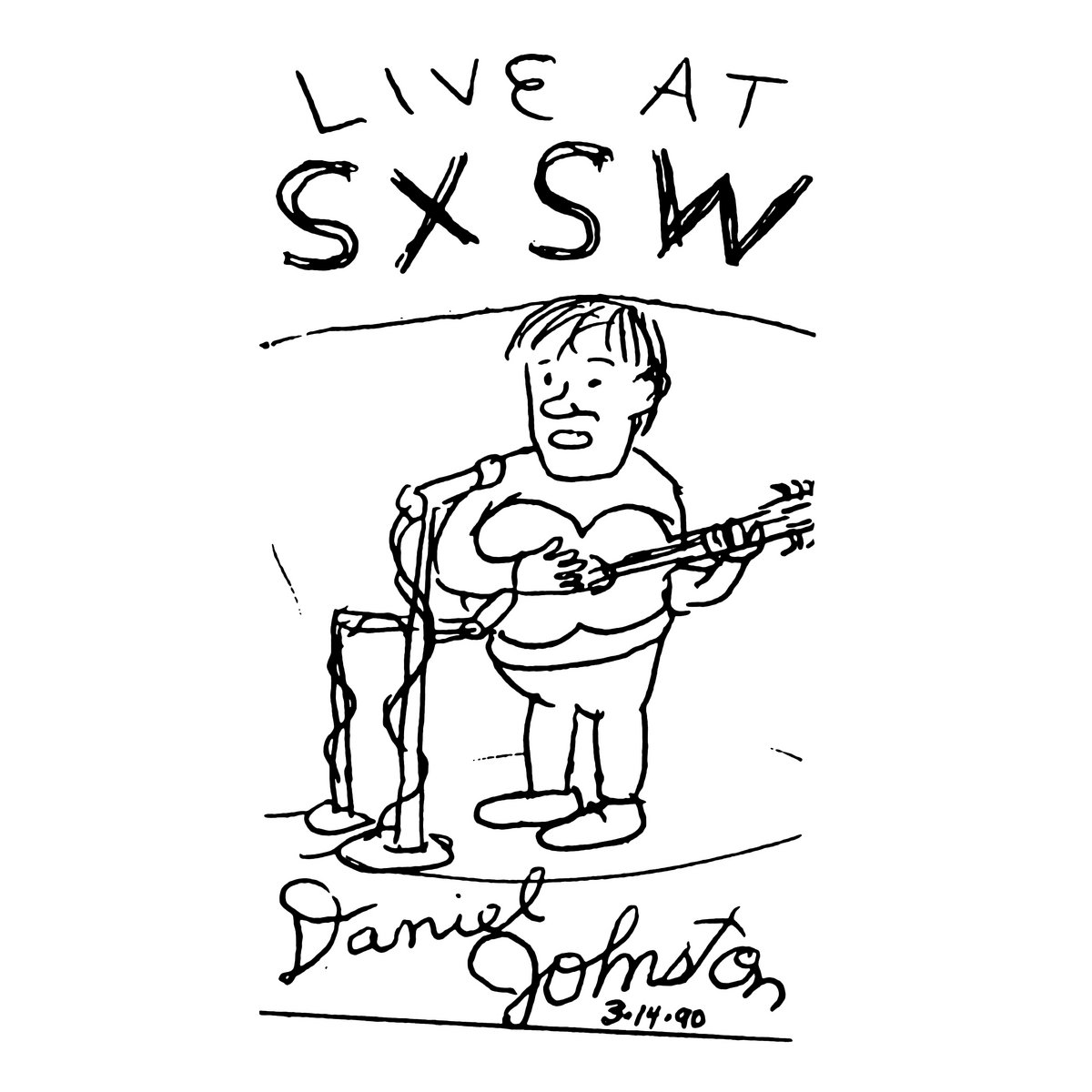
Live at SXSW (1990)
Live At SXSW is a live mini-album by Johnston, recorded at South By South West on March 14, 1990, two months after his last album, 1990. Stress Records released the album in 1991. Background After a year of institutionalization, Johnston was invited to perform at the Austin Chronicle Music Awards and South By South West 1990 after the promoters heard he was stable and medicated. The performances were highly anticipated thanks to manager Jeff Tartakov’s promotion and the releases of Merry Christmas, It’s Spooky, and 1990, all put out during his institutionalization. Johnston was flown to Austin by his father, Bill Johnston and made two in-store appearances with hundreds in attendance. On that night, Johnston performed three 8-13 minute sets at The Palmer Auditorium, Waterloo Records, and Sound Exchange Records. The shows consisted primarily of newly written material, with the exceptions being re-worked versions of “Running Water,” “Worried Shoes,” “Casper The Friendly Ghost” & “Museum of Love” from his 1983 demo tapes. The shows featured no songs from the recently released 1990. Unknown to anyone but himself, Johnston had been flushing his medication to prepare for the show, believing that it would be better the ‘crazier’ he was. This led to a delusional episode in his father’s plane during the journey home. Johnston was reading a Casper The Friendly Ghost comic book, which featured the titular character skydiving, which fuelled his delusions. Johnston wrestled with his father, turned the engine off, threw the key out the window, and took the controls. Bill took the controls back and crashed the plane into a tree. The two got out safely and were found by their family. Johnston was hospitalized for five months, being released in August 1990. A few months after the concert, the Palmer Auditorium version of “Do You Really Love Me?” was released as the B-Side to a re-recording of “Speeding Motorcycle” featuring Yo La Tengo. Shortly afterward, “Do You Really Love Me?” would be retitled “Tell Me Now” and appeared on Johnston’s following album, Artistic Vice. Legacy Johnston would re-record “Silly Love” for the album Fun and “A Lonely Song” and “Love Wheel” for his 2006 album Lost & Found. In 1992, Jad Fair and the Pastels released a cover of “A Lonely Song”. In 2005, Kathy McCarty released an abridged cover of “Love Wheel” on the extended version of her Daniel Johnston tribute album Dead Dog’s Eyeball. For the 2006 Johnston tribute album I Killed The Monster, Kramer created a remix of ‘Love Wheel’ based on Emily Zuzik’s cover. In 2010, Yeongene, a supergroup, featuring Duglas T Stewart, Francis MacDonald, Norman Blake & David Scott released a cover of “Do You Really Love Me?” Live at SXSW (1990) by Daniel Johnston
March 14, 1990
July 1, 1991
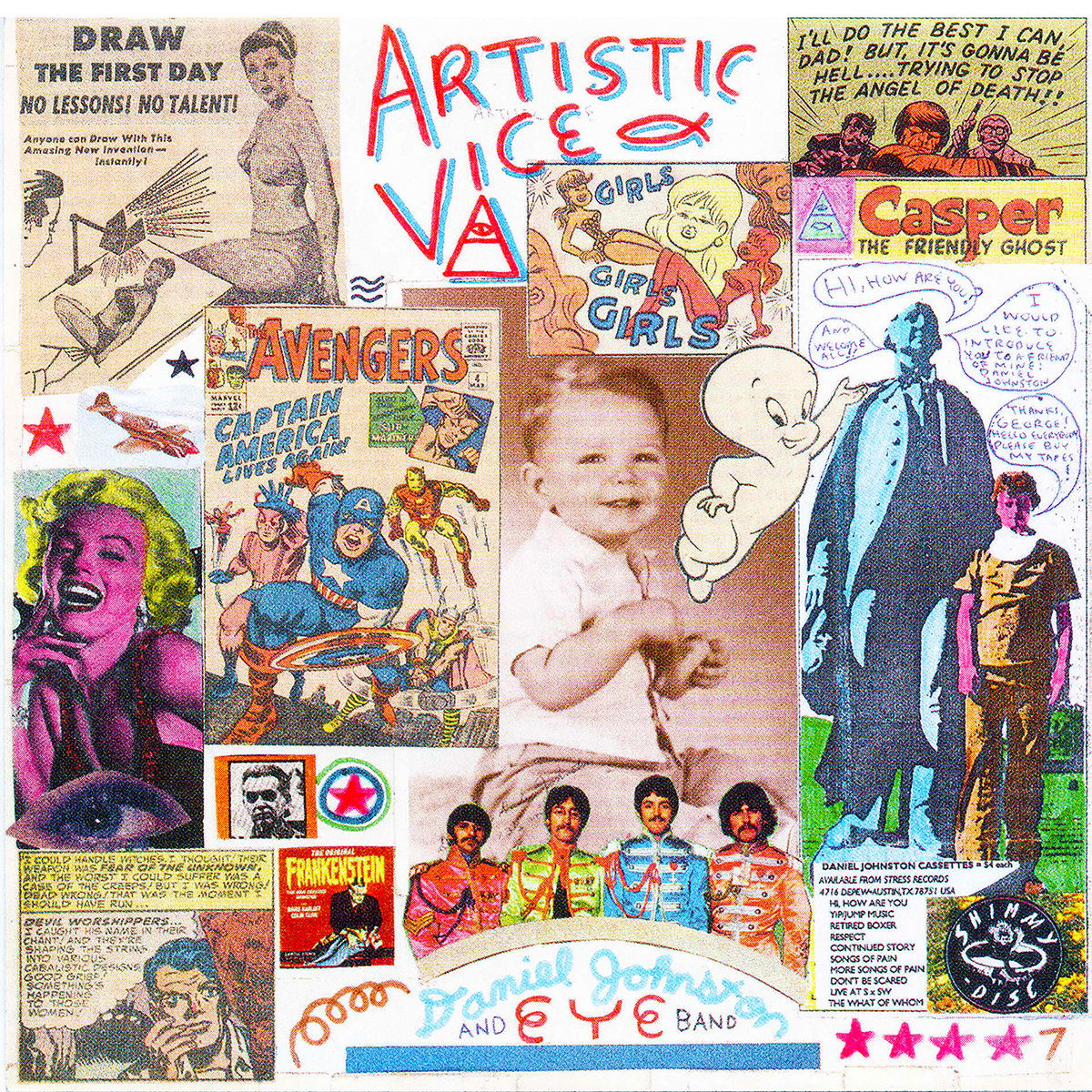
Artistic Vice (1991)
Writing Following his year-long stay at Weston Mental Hospital, Johnston recorded the Laurie EP in December 1989, the title track of which is featured on this album. A few months later, after the release of Johnston’s 1990 album, Johnston was invited to promote it with three short performances at SXSW. Instead of performing material from the album, Johnston debuted new material and reworked selections from his 1983 demo tapes. Johnston premiered four songs at these shows, ‘Silly Love,’ ‘Do You Really Love Me?’, ‘A Lonely Song’ & ‘Love Wheel.’ ‘Do You Really Love Me?” was eventually re-worked into ‘Tell Me Now’, and the rest were shelved for future releases. Immediately following the performances, Johnston was hospitalized for five months between March and August 1990, after causing his father to crash his plane into a forest amidst a delusional episode. During this period Johnston’s popularity continued to rise, partially thanks to Homestead Records‘ continued re-issues of his earlier tapes, concluding in 1991 with a cassette / LP version of Continued Story, and the ‘Continued Story / Hi, How Are You‘ CD. During this time Firehose’ cover of Walking The Cow was released on their Flyin’ the Flannel album, and The Pastels released their cover of Speeding Motorcycle, continuing to boost Johnston’s notoriety as a songwriter. The songwriting style on this album showcases Johnston’s commercial ambitions, and slyly nods to his growing fame. The lyrics also refer to Johnston’s improving mental state, in particular the song ‘I Killed The Monster’ confidently boasts that Johnston had defeated his personal demons. Recording Although it is considered a ‘studio’ album, the songs were actually recorded by Kramer in a make-shift studio in the garage at Chuck Picklesimer’s house in July 1991, in Daniel’s home state of West Virginia. For the album, he formed The Eye Band; a backing band made up entirely of Johnston’s friends. The sessions were produced by Kramer, who was also responsible for his previous album, 1990. Although the sessions took place in West Virginia, by late 1991, the Johnston family had relocated to Waller, Texas. The album is dedicated to Laurie Allen, Johnston’s muse who he had not seen in over a decade at that point. A copy of the album had been sent to her. Johnston was thrilled to find she enjoyed the album. Critical reception Professional ratings Review scores Source Rating AllMusic The Encyclopedia of Popular Music MusicHound Rock: The Essential Album Guide Spin Alternative Record Guide 3/10 Trouser Press called the album an “ebullient blast of lo-fi electric garage-rock,” writing that “the glimmers of deliverance make this cogent album as encouraging as it is enjoyable.” Legacy Two years after the album was released, Television Personalities released a cover of ‘Honey I Sure Miss You’. That same year, Terry Burrows, under the pseudonym of Yukio Yung, released a cover of ‘I Feel So High’. Canadian twee pop band Cub released a cover of “Tell Me Now” on their 1993 album “Betti-Cola“. In 2004, Jad Fair and Teenage Fanclub collaborated on a cover of “My Life Is Starting Over Again” for the Daniel Johnston tribute album The Late Great Daniel Johnston: Discovered Covered. A few years later, in 2006, the album’s producer Kramer performed bass and keyboards on a cover of “Honey I Sure Miss You”. That same year, Jad Fair and Teenage Fanclub released a cover of “Happy Soul”. In a 2009 interview, Jeffrey Lewis cited Artistic Vice specifically as an influence on his songwriting. In 2019, The New York Times included “My Life is Starting Over” in their list of Johnston’s 12 essential tracks. The following year the album was reissued on vinyl as part of the box set The End Is Never Really Over. That same year Built To Spill covered “Tell Me Now” and “Honey I Sure Miss You” as part of their Johnston tribute album, and folk supergroup I Was A King, featuring Frøkedal, Norman Blake and Robyn Hitchcock, released their cover of “Honey I Sure Miss You”. Artistic Vice (1991) by Daniel Johnston
July 1, 1991
January 1, 1998
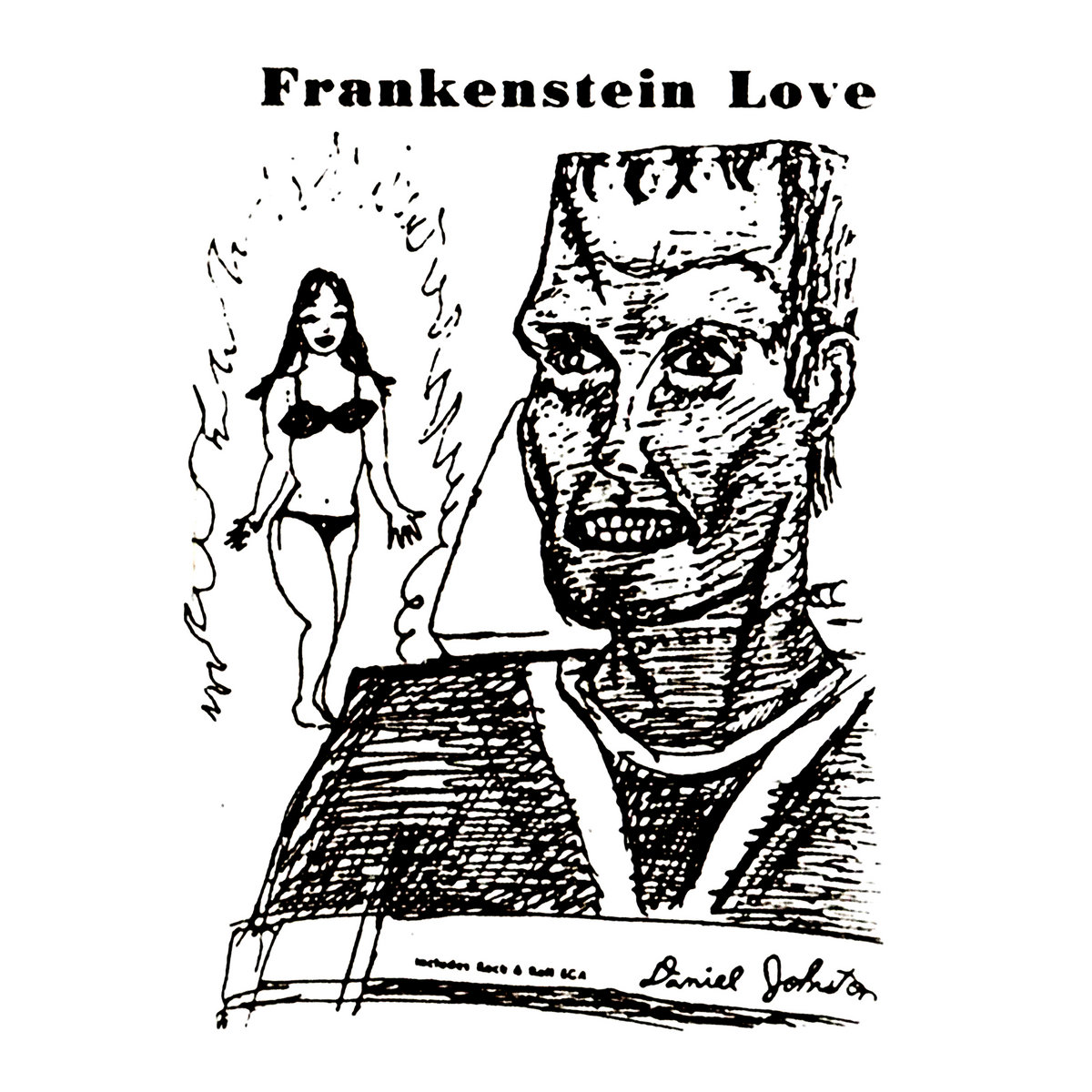
Frankenstein Love (1998)
Frankenstein Love is a live album recorded in 1992 at the Houston Room by Daniel Johnston. It was also released in digital format through eMusic in 2000. Frankenstein Love (1998) by Daniel Johnston
January 1, 1998
May 15, 2000
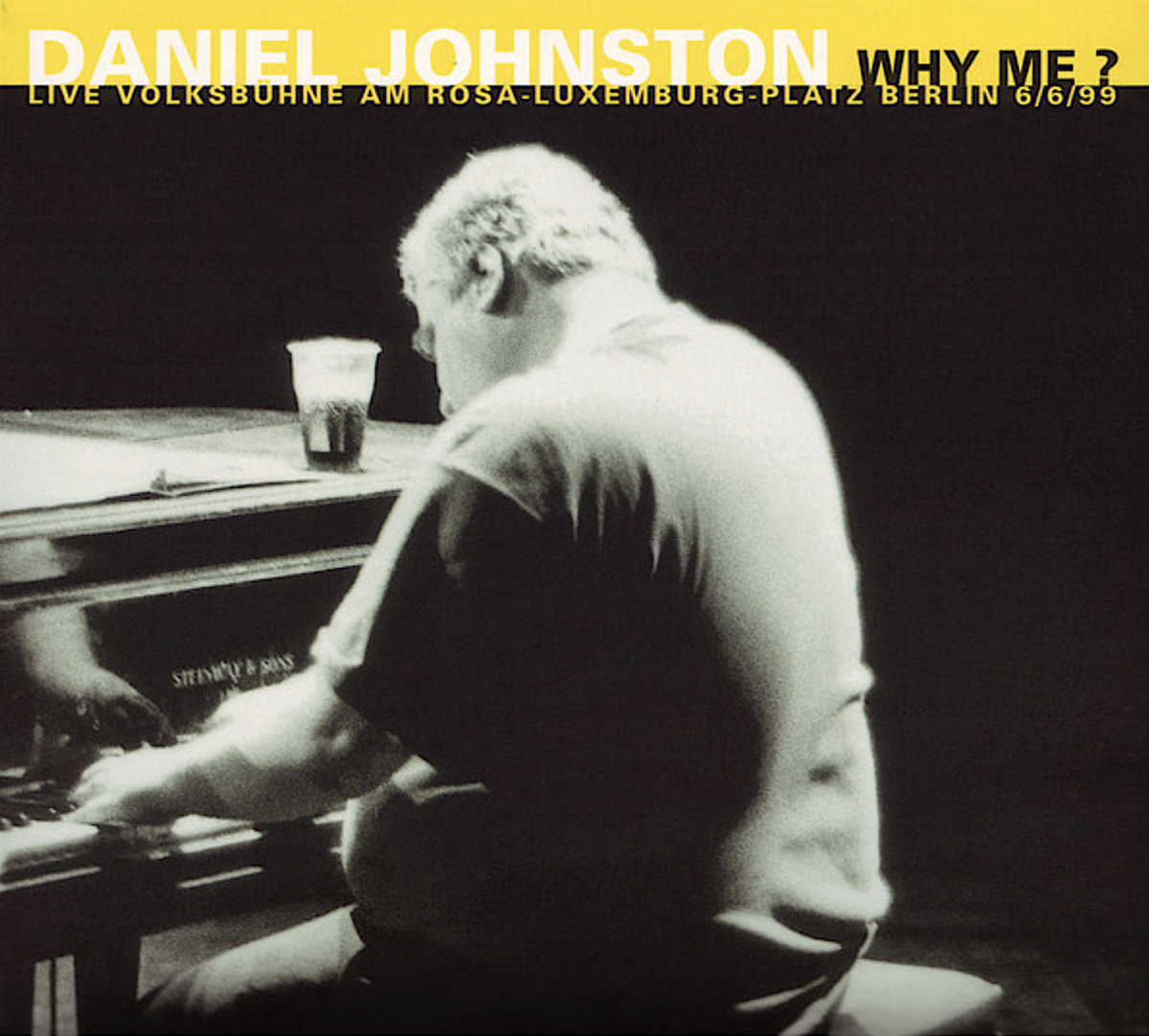
Why Me? (2000)
Why Me? is a live album recorded in Germany by Daniel Johnston. Recorded live at Volksbühne am Rosa-Luxemburg-Platz in Berlin, Germany on 6/6/1999. Why Me? (2000) by Daniel Johnston
May 15, 2000
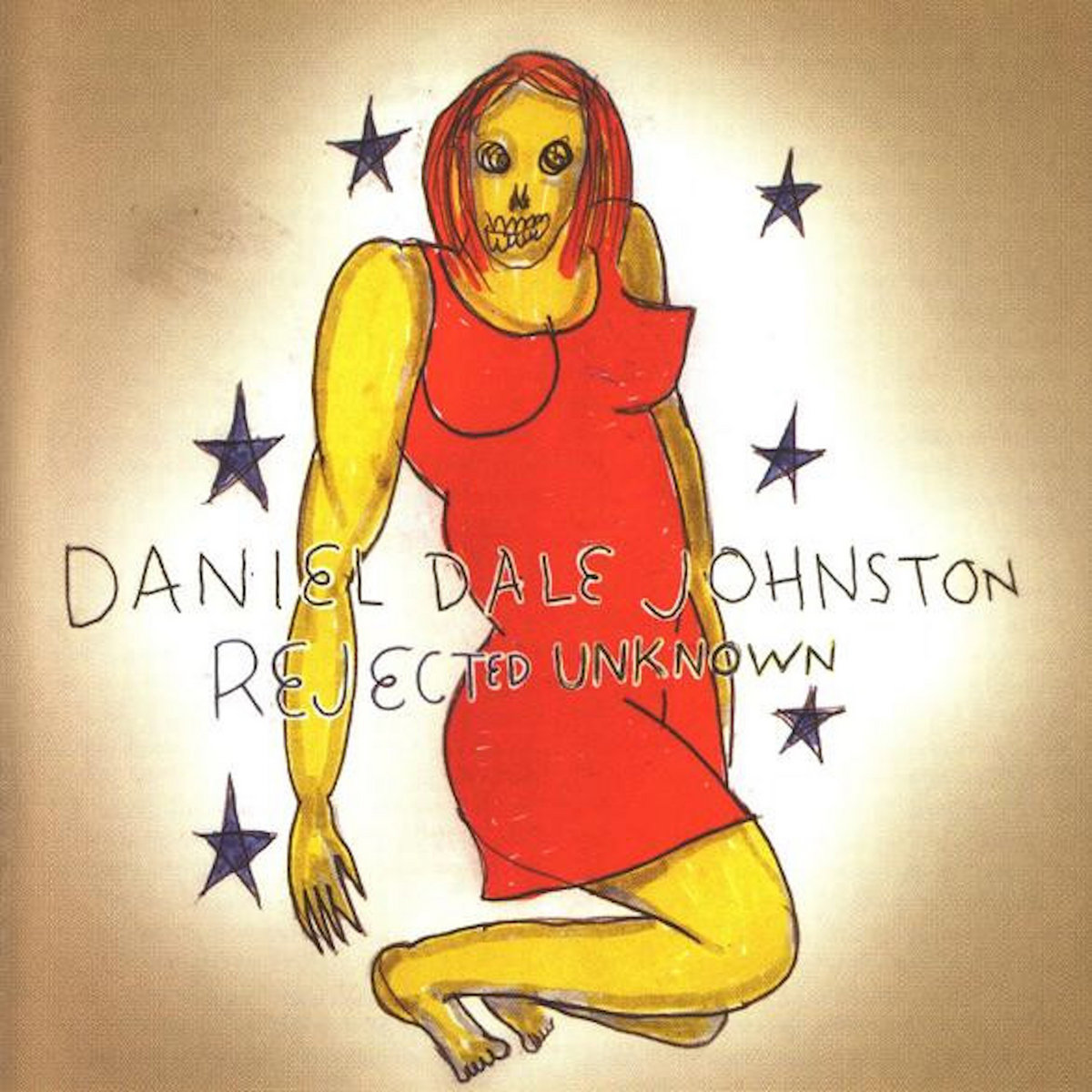
October 9, 2001
Rejected Unknown (2001)
Rejected Unknown is a 2001 album by acclaimed outsider musician Daniel Johnston. The title references the decision by Atlantic Records to drop him from the label after the commercial failure of his only major-label album, 1994‘s Fun. Rejected Unknown was produced by Austin producer and former Glass Eye member Brian Beattie. A 7-inch limited edition EP called Dream Scream, featuring that song and “Funeral Girl”, was released in 1998 on Pickled Egg Records. Background Following the release of his 1994 Atlantic Records album Fun, Johnston waited for contact from the label on producing a follow-up, but, despite insistence from the label that Johnston had not been dropped, he was never contacted, and a lack of activity and medication caused Johnston to become overweight. In 1995, Johnston worked with producer Brian Beattie on the song “Casper” for the Larry Clark film Kids, which began a prosperous working relationship. Beattie and Johnston submitted a number of tracks to Atlantic Records as material for a potential album, but were dropped by the label instead. Beattie had convinced Johnston that leaving Atlantic was good, as they were ‘unsatisfiable’ and ‘didn’t understand.’ During this period, Johnston began to make several live appearances, including five live dates in 1997, six in 1998, five in 1999 and eleven in 2000; with each year featuring performances at SXSW. A June 1999 performance at Radio Fritz, Germany, became Johnston’s first professionally recorded live album, Why Me?. In April 1999, Johnston recorded and self-released the Danny And The Nightmares album, co-written with Jason Lee Damron. Promotion In March 1999, it was announced that Johnston had been signed to Tim/Kerr Records and that they would release ‘Rejected/Unknown’ but that illness within the label’s management team was preventing its release – and ultimately the album was released in October 2001 by Gammon Records; although limited copies of the album released by Newimprovedmusic, Which Records, and Pickled Egg Records were available as early as 1999. This was Johnston’s first album to be supported by a tour, which took place between December 2001 and July 2002. Reviews Upon the album’s October 2001 release, it was positively reviewed by Pitchfork. In their 2019 Daniel Johnston obituary, NME called Rejected Unknown a ‘stunning career best.’ Rejected Unknown (2001) by Daniel Johnston
October 9, 2001
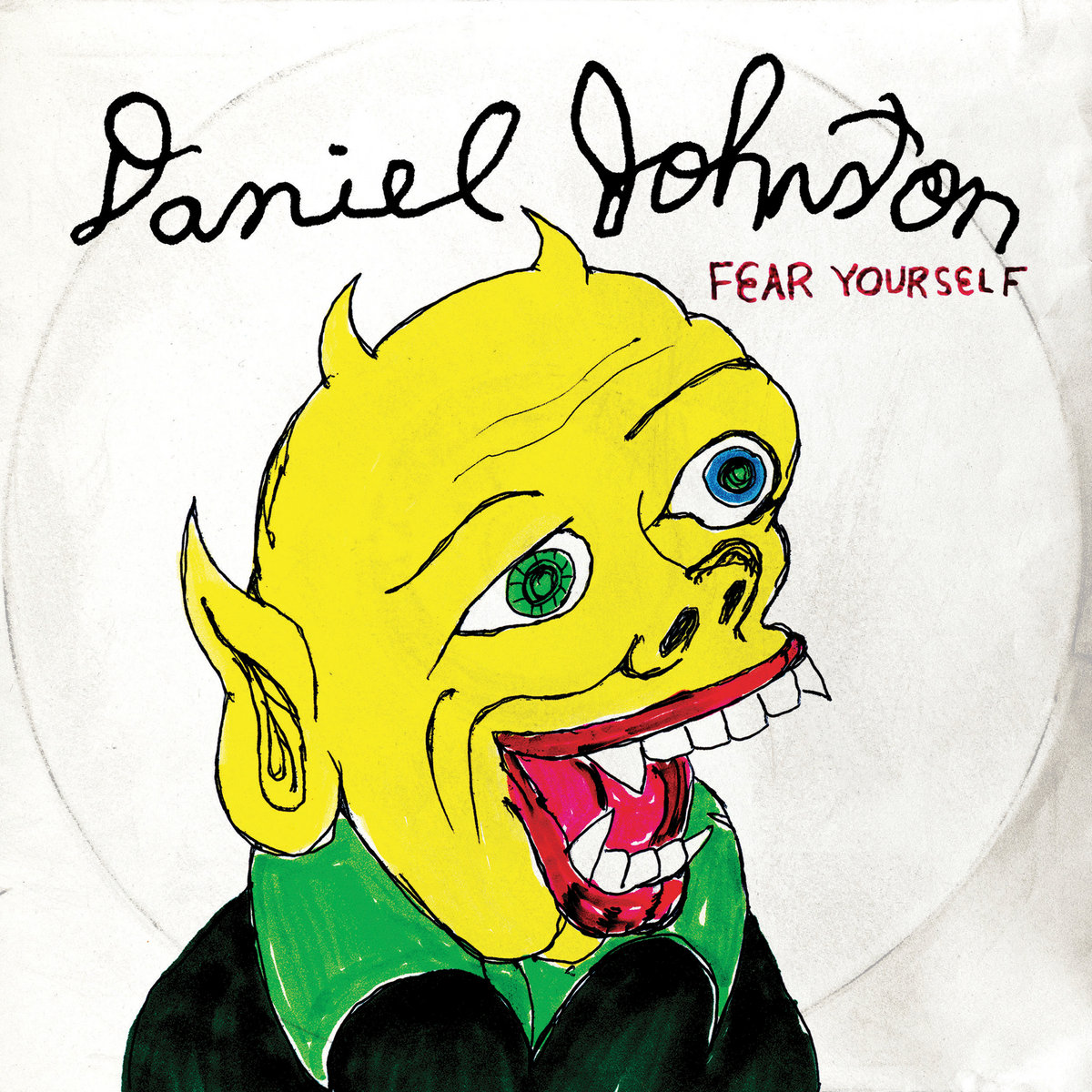
February 25, 2003
Fear Yourself (2003)
Fear Yourself is an album by the American musician Daniel Johnston, released in 2003. It was produced by Mark Linkous. The album included an 8-page booklet with exclusive Daniel Johnston drawings. Critical reception The Independent wrote that the “fancy production … works to a point, but, by the end, you find yourself preferring Johnston’s usual eerie starkness.” The Washington Post determined that “Johnston’s pained, humble songs are eerie and sensuous, emotionally textured in a way that demands only amplification, and Linkous’s vintage box of tricks suits the songs beautifully.” The New York Times concluded that Linkous’s contribution to the music “reveals the cracked, epic romances hidden within Mr. Johnston’s singsong.” Fear Yourself (2003) by Daniel Johnston
February 25, 2003
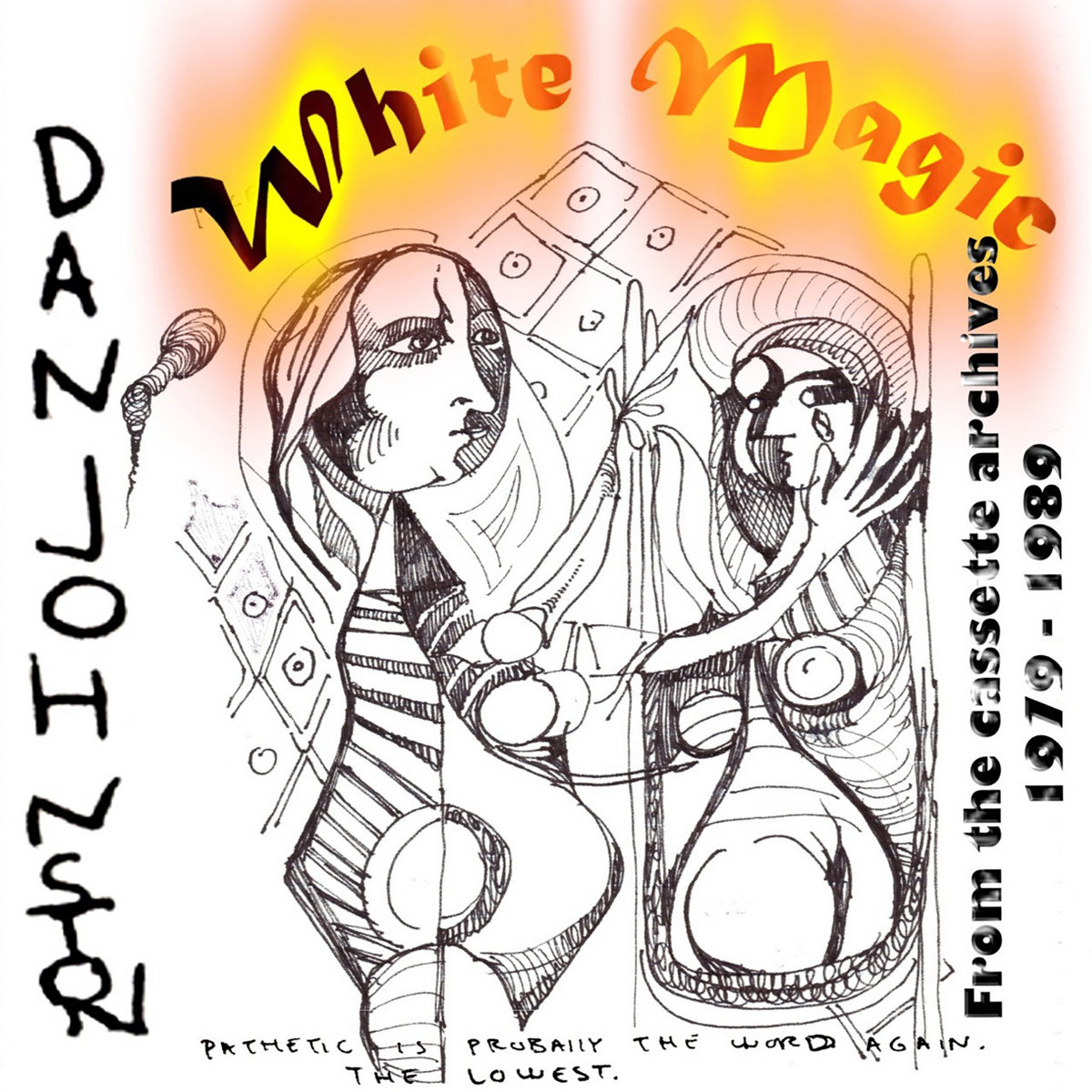
January 1, 2004
White Magic (2004)
Assembled between 2002-2004 and originally released on a limited run of 500 CD-R’s, White Magic was assembled as a compilation by Daniel’s brother with the help of knowledgeable fans, and in particular Doug Sulpy, authoer of several pop music books. This is the first compilation of material dated 1979 through 1989, and released in 2004 on Eternal Yip Eye Music. White Magic (2004) by Daniel Johnston
January 1, 2004
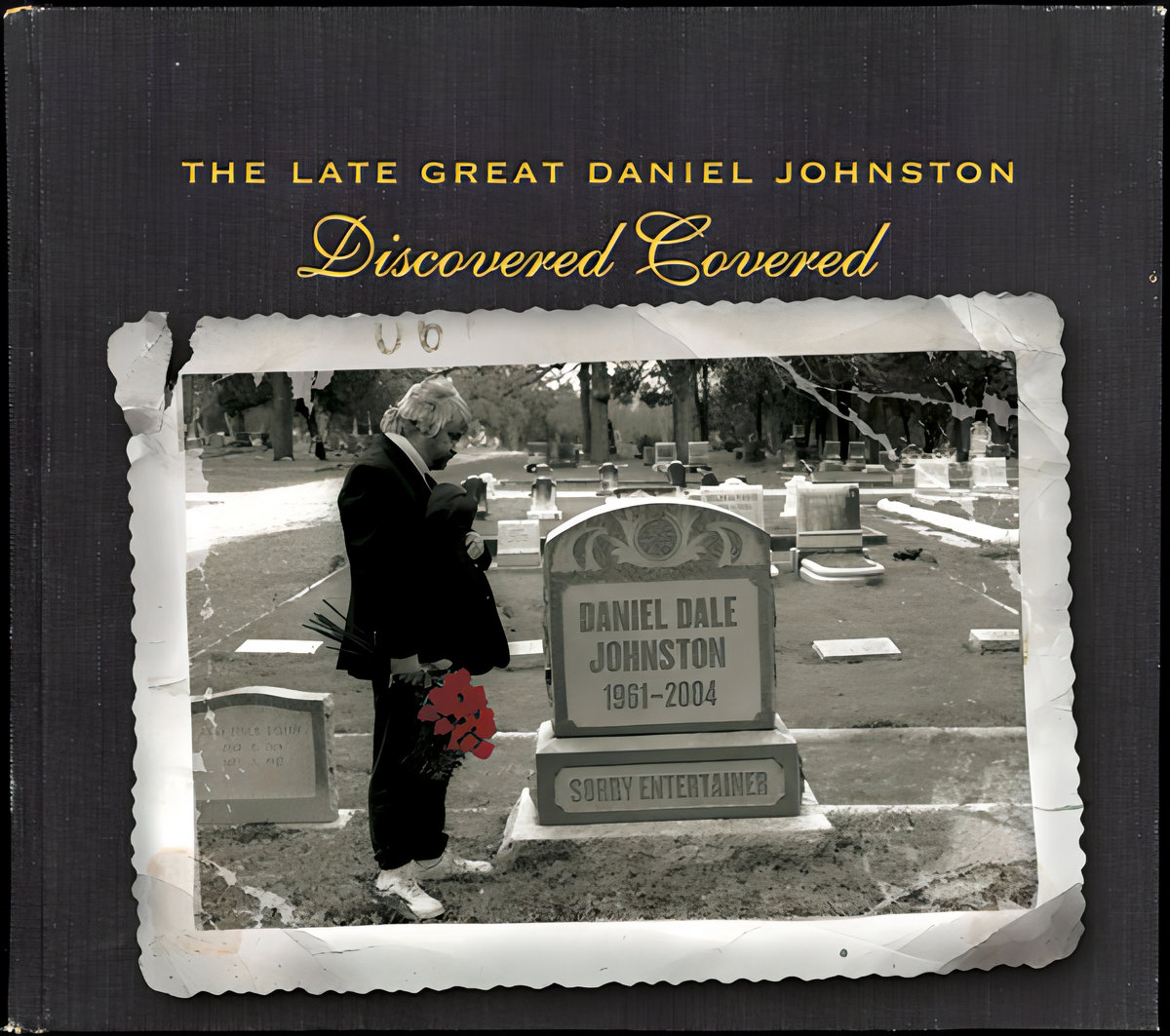
January 1, 2004
The Late Great Daniel Johnston: Discovered Covered (2004)
The Late Great Daniel Johnston: Discovered Covered is a 2004 Gammon Records two-disc set. The first disc features covers of Daniel Johnston songs by a variety of different artists. The second disc features the original versions of these eighteen songs, as well as “Rock This Town”, a previously unreleased Johnston track. It was curated and produced by Mark Linkous of Sparklehorse. Despite what the title and cover art may suggest, Johnston lived to see the album’s release; he died fifteen years later in 2019. Disc 1: No. Title Artist Length 1. “My Life is Starting Over Again” Teenage Fanclub with Jad Fair 2. “Don’t Let the Sun Go Down on Your Grievances” Clem Snide 3. “Impossible Love” Gordon Gano 4. “Living Life” Eels 5. “Walking the Cow“ TV on the Radio 6. “Good Morning You” The Rabbit 7. “Sorry Entertainer” Calvin Johnson 8. “Devil Town” Bright Eyes with Nick Zinner 9. “Dream Scream” Death Cab for Cutie 10. “True Love Will Find You in the End” Beck 11. “Go” Sparklehorse with The Flaming Lips 12. “Blue Clouds” Mercury Rev 13. “Love Not Dead” Thistle LLC 14. “Like a Monkey in a Zoo” Vic Chesnutt 15. “Dead Lover’s Twisted Heart” Starlight Mints 16. “Story of an Artist” M. Ward 17. “The Sun Shines Down on Me” Guster 18. “King Kong” Tom Waits Disc 2: All tracks on this disc performed by Daniel Johnston. No. Title Album Length 1. “My Life is Starting Over Again” Artistic Vice 2. “Don’t Let the Sun Go Down on Your Grievances” Yip/Jump Music 3. “Impossible Love” Rejected Unknown 4. “Living Life” Songs of Pain 5. “Walking the Cow“ Hi, How Are You 6. “Good Morning You” Respect 7. “Sorry Entertainer” Yip/Jump Music 8. “Devil Town” 1990 9. “Dream Scream” Rejected Unknown 10. “True Love Will Find You in the End” Retired Boxer 11. “Go” Respect 12. “Blue Clouds” The What of Whom 13. “Love Not Dead” Fear Yourself 14. “Like a Monkey in a Zoo” Songs of Pain 15. “Dead Lover’s Twisted Heart” Yip/Jump Music 16. “Story of an Artist” Don’t Be Scared 17. “The Sun Shines Down on Me” Don’t Be Scared 18. “King Kong” Yip/Jump Music 19. “Rock This Town” Previously unreleased The Late Great Daniel Johnston: Discovered Covered (2004) by Daniel Johnston
January 1, 2004
April 1, 2006
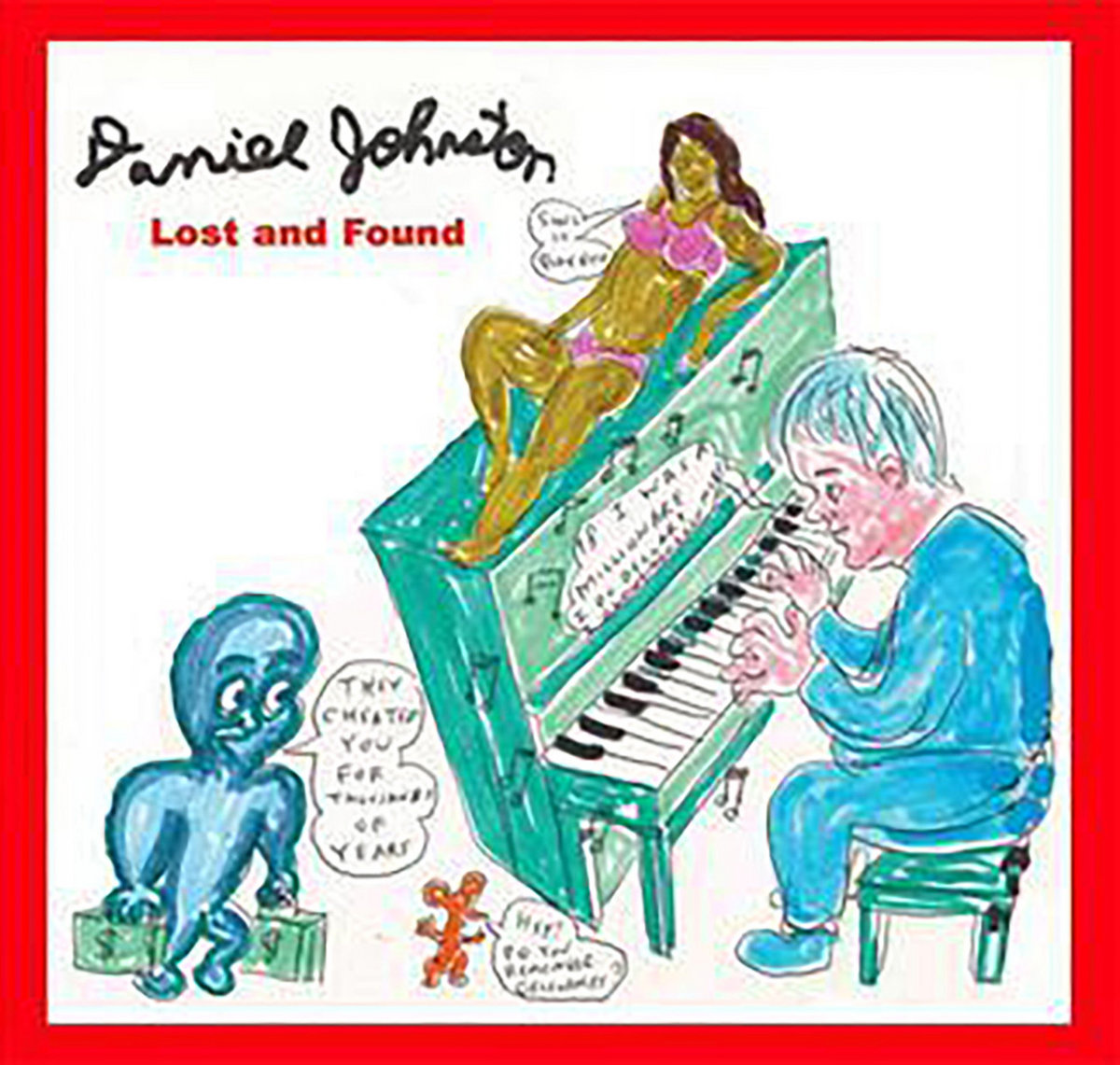
Lost and Found (2006)
Lost and Found is a 2006 album by Daniel Johnston, his 16th release since 1981. A companion album to ‘Rejected Unknown’, these songs were recorded by a 45 year old Daniel, no longer a giddy youth, now more deeply haunted by love and scorched by the loneliness and torment of mental illness. These songs explore the turbulently joyous life of Daniel’s soul, enhanced by the palette of Brian Beattie’s eclectic and experimental musical choices. Daniel’s voice aches raw and seeks it’s target, the heart… relentlessly. 100% of profits go to the Daniel Johnston Estate for the purpose of securing his musical and artistic legacy.` credits released April 1, 2006 All songs written by Daniel Johnston, Produced & Engineered by Brian Beattie. Recorded in Daniel’s and Brian’s garages. Remastered in 24-bit Lossless Audio from the original source tapes by Kramer (Shimmy-Disc founder and longtime collaborator of Daniel Johnston). Daniel Johnston – Vocals, Guitar, Piano, Organ [Chord], Percussion, Backing Vocals. Brian Beattie – Bass, Guitar, Keyboards, Ukulele, Drums, Percussion, Backing Vocals. Alto Saxophone – Monica Champion (track: 3) Drums – Dave Jungen (track: 8, 9), John Greene (track: 14),John Paul Keenan (track: 1), Pam Barger (track: 4) Guitar – Craig Ross (tracks: 1, 3, 9, 13, 14), Peter LaFond (tracks: 8, 9) Guitar, Backing Vocals – Ethan Azarian (tracks: 11) Lap Steel Guitar – Craig Ross (track: 8) Snare, Backing Vocals – Ken Lieck (track: 11) Lost and Found (2006) by Daniel Johnston
April 1, 2006
April 18, 2006
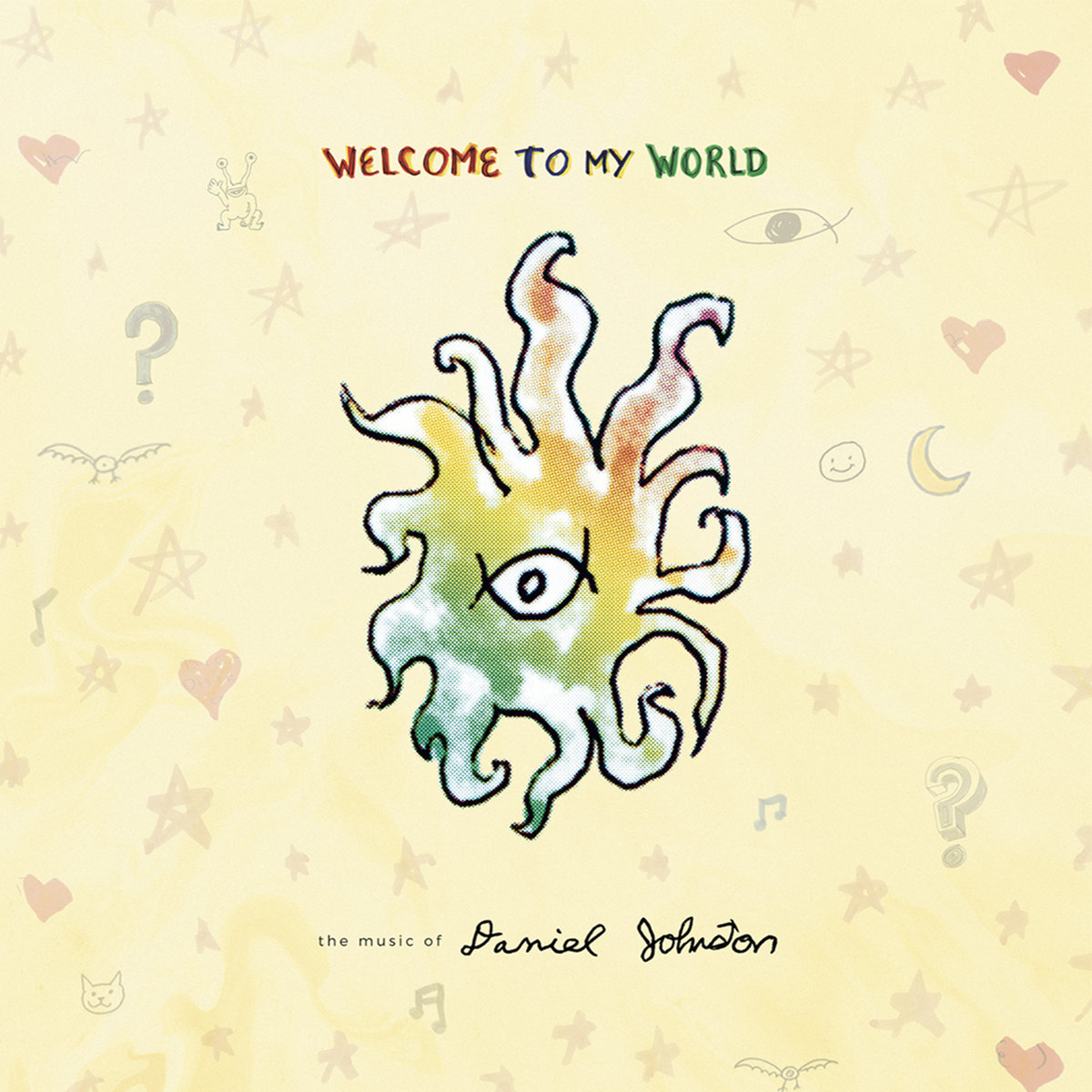
Welcome To My World (2006)
“Welcome To My World” is a collection of some of Daniel’s most-beloved songs. These are the songs that built the legend…a must-have for the legion of devoted Daniel Johnston Fans as well as the perfect introduction for new listeners. Includes several tracks from out-of-print publications like “Laurie” and “Lennon Song”. credits released April 18, 2006 Remastered in 24-bit Lossless Audio from the original source tapes by Kramer (Shimmy-Disc founder and longtime collaborator of Daniel Johnston). Welcome To My World (2006) by Daniel Johnston
April 18, 2006
October 6, 2009
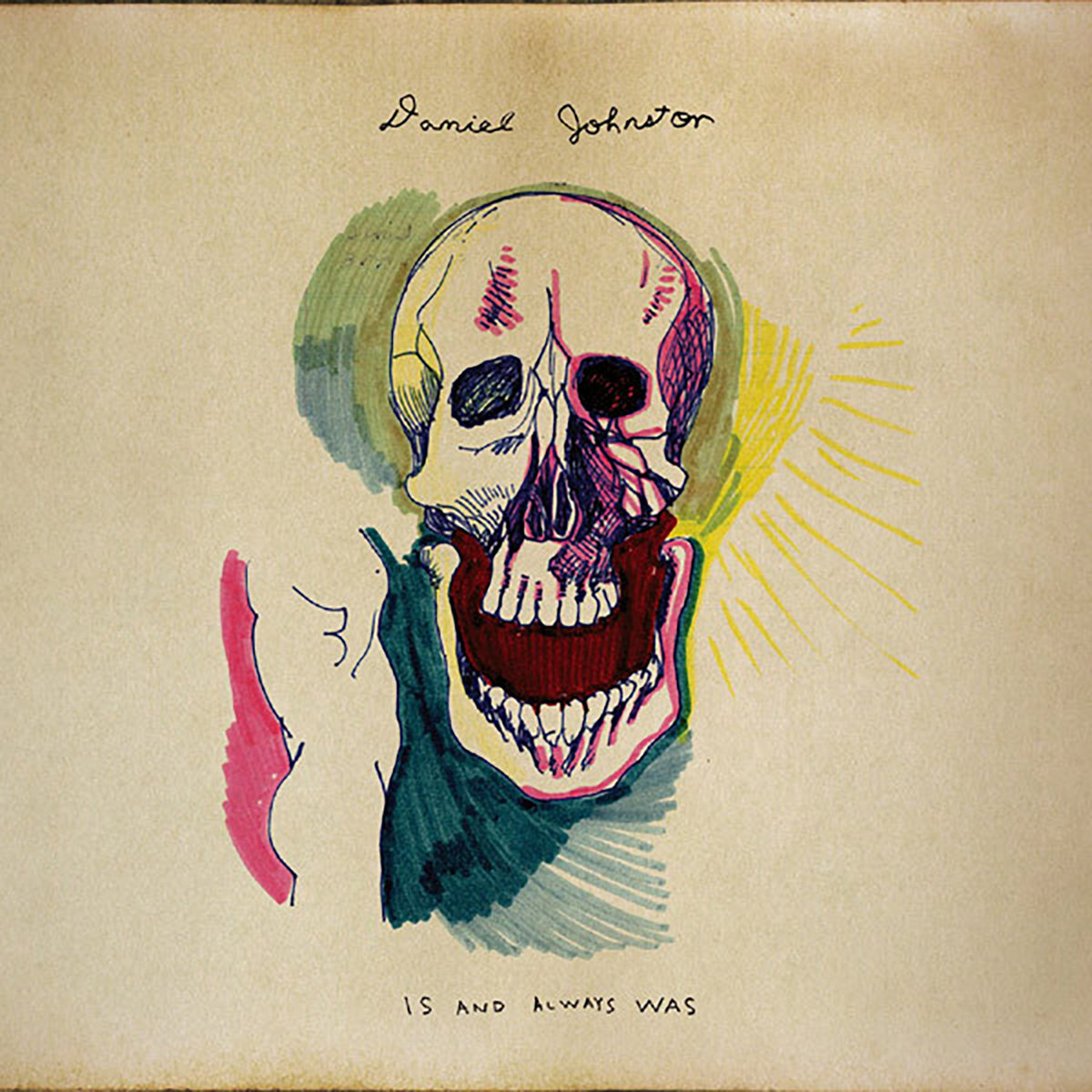
Is And Always Was (2009)
Originally released in 2009, it was Daniel’s first new studio album in over 7 years. 100% of profits go to the Daniel Johnston Estate for the purpose of securing his musical and artistic legacy. credits released October 6, 2009 Produced, Recorded & Mixed by Jason Falkner at Rhetoric. Remastered in 24-bit Lossless Audio from the original source audio by Kramer (Shimmy-Disc founder and longtime collaborator of Daniel Johnston). All Voices & Instruments by Daniel Johnston & Jason Falkner Except: Joey Waronker, Drums on High Horse, Without You, I Had Lost My Mind, Is & Always Was, Lost In My Infinite Memory & Light Of Day. Woody Jackson, Acoustic Guitar on Queenie The Doggie & Solina on Mind Moves. The Part of ‘Queenie’ was played by Pablo. Is And Always Was (2009) by Daniel Johnston
October 6, 2009
June 17, 2010
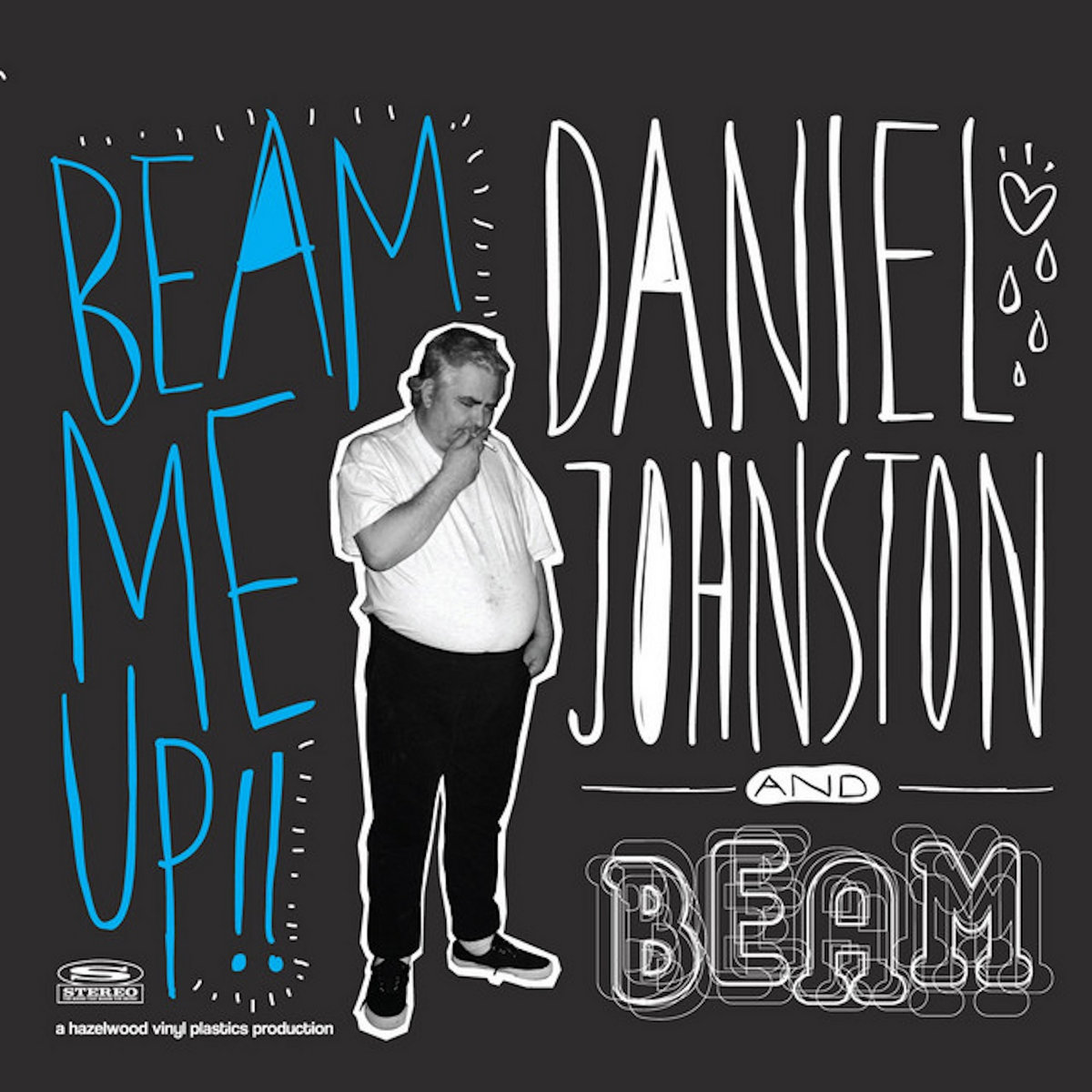
Beam Me Up! (2010)
Beam Me Up! is the eighteenth and final album by Daniel Johnston released on June 17th 2010. The album was recorded with the eleven-piece BEAM orchestra, and features reworked versions of Johnston’s older songs along with three new songs: “Sarah Drove Around In Her Car”, “Mask”, and “Last Song”. Credits Remastered in 24-bit Lossless Audio from the original source tapes by Kramer (Shimmy-Disc founder and longtime collaborator of Daniel Johnston). All songs were written by Daniel Johnston, published by E.Y.E. Music and BMG Music Publishing. Arrangements by Bart van Dongen, Eric van der Westen, Richard van Kuijsdijk and Andreas van Zoelen. Recorded by Kaneoka One and Chris Müller at W2 in ‘s-Hertogenbosch. Mixed and mastered by Kaneoka One and Two Horses at Hazelwood Studios/ Frankfurt am Main. Produced by Hazelwood Music Production and Production House Muzieklab Brabant.Acoustic Guitar, Electric Guitar – Michiel StekelenburgBass Saxophone, Baritone Saxophone – Andreas van ZoelenCello – Jacqueline HamelinkDouble Bass – Eric van der WestenDrums – Yonga SunElectric Guitar – Bruno NelissenElectronics, Keyboards, Electronic Drums [Percussion] – Richard Van Kruijsdijk*Guitar, Vocals – Daniel JohnstonKeyboards – Bart van DongenSoprano Saxophone, Tenor Saxophone, Alto Saxophone – Guido NijsTrombone, Accordion – Hans SparlaViolin – Yvonne van de Pol Beam Me Up! (2010) by Daniel Johnston and B.E.A.M. Orchestra
June 17, 2010
April 17, 2012
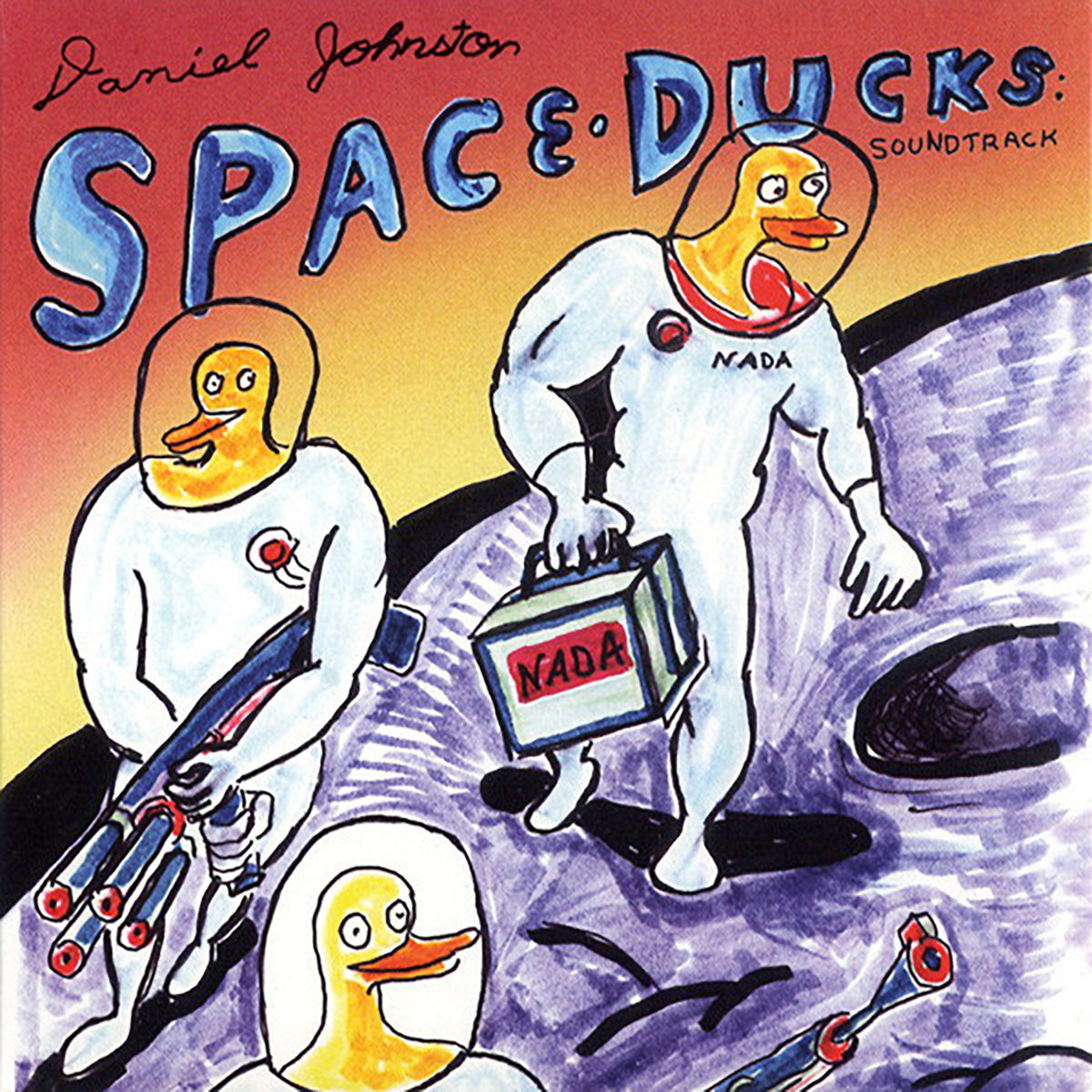
Space Ducks: Soundtrack (2012)
Space Ducks: Soundtrack is a compilation album by American recording artist Daniel Johnston. It was released on Daniel Johnston‘s Eternal Yip Eye Label in 2012, with a later, longer version released on Feraltone in 2013. It was inspired by Johnston’s comic Space Ducks: An Infinite Comic Book of Musical Greatness. It also features songs from Unknown Mortal Orchestra, Eleanor Friedberger, Deer Tick, Fruit Bats, and Lavender Diamond. Space Ducks: Soundtrack was inspired by Daniel Johnston’s comic, Space Ducks: An Infinite Comic Book of Musical Greatness. Originally released in 2012 on Eternal Yip Eye Music and Feraltone (UK). credits released April 17, 2012 Tracks 1-3, 6, 9-11 written and performed by Daniel Johnston. Produced by Adrian Quesada and recorded by Sam Patlove.Track 14 written by Daniel Johnston and performed by Daniel Johnston and Kramer. Produced by Kramer in Waller, TX (2013). Remastered in 24-bit Lossless Audio from the original source tapes by Kramer (Shimmy-Disc founder and longtime collaborator of Daniel Johnston). Many thanks to Eleanor Friedberger, Fruit Bats, Lavender Diamond, Unknown Mortal Orchestra, Deer Tick, Jeffrey Lewis, and Kramer for their additional contributions. Space Ducks: Soundtrack (2012) by Daniel Johnston
April 17, 2012
January 19, 2024
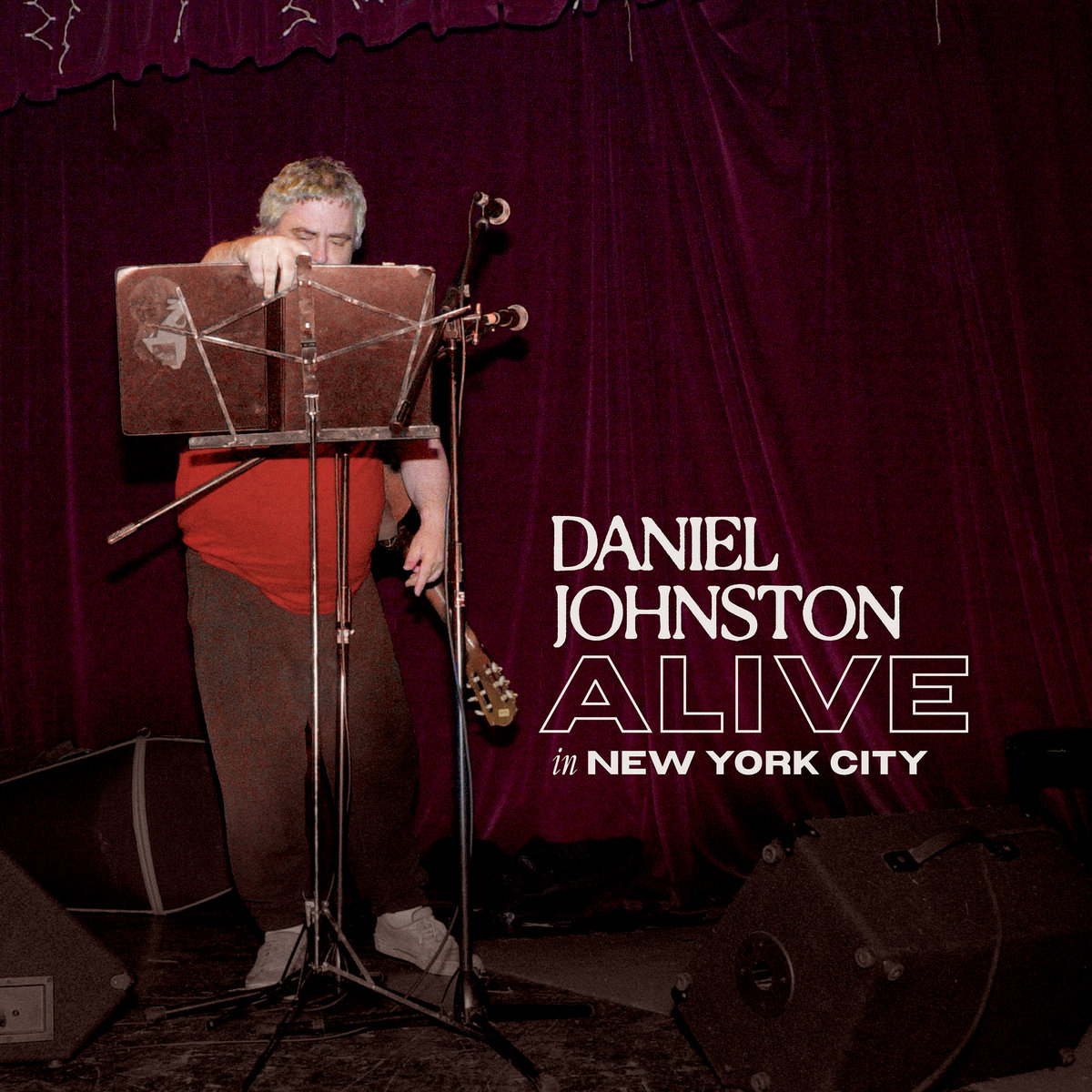
Alive in New York City
Released January 19, 2024, this historic release is available in three distinct vinyl pressings and one limited-edition cassette. The 1st pressing is limited to 555 hand-numbered LP’s on 150gm black vinyl. It includes a VERY SPECIAL Art Print of a previously unseen Daniel Johnston colored marker drawing available ONLY in this first pressing. This very special release also features a limited-edition 2nd pressing of 999 LP’s on “Ghost White” vinyl, in memory of ‘Casper’, one of Daniel’s favorite characters. An “Invisibly Clear” vinyl pressing is also available, and will arrive in stores on January 19, 2024 along with the limited-edition cassette. The free digital download card that accompanies each vinyl purchase also includes “The Telephone Demos”. NOTE: The first pressing of 555 black vinyl LP’s will be available ONLY from the Shimmy-Shop and Bandcamp. Also included in each of the three vinyl pressings is a beautiful 3-ft tall fold-out poster of Daniel in New York City. The 56 minute Cassette release also includes “The Telephone Demos”. (From the LP Liner Notes): “Daniel played several shows in New York City in April of the year 2000, but there is no way to know for certain the exact date this recording was made, or the venue in which the performance took place. Sorry. This LP was Mastered from a ‘DAT’ Kramer found 20 years later. It contains one brilliant Daniel Johnston performance in its entirety, unedited, unaltered, unforgettable. These memories conclude with a brief excerpt from a street interview Daniel gave in New York City, recorded during the same period in his extraordinary life. We hope you find yourself treasuring these frozen moments as much as we do. The End.” Shimmy-Disc is elated to announce a brand new LP from the legendary American artist Daniel Johnston, titled “ALIVE in NEW YORK CITY” – a full live concert captured in front of an audience of his most devoted fans in New York, the city of Daniel’s dreams. Daniel is at the very height of his performing powers here, with his poignant voice and exquisite heart beating in full bloom, and the audience is with him all the way. No other live performance recording we’ve ever heard captures the marriage of audience & performer in the way this one has. Hearing it, is like being there. Daniel gave it all on this very special night. This is the first official vinyl release of Daniel performing live in the USA, and Shimmy-Disc is proud to be partnering with The Daniel Johnston Estate for this historic vinyl event. Recorded and live-mixed by Kramer in April of 2000, the long-lost tape was found by Kramer 20 years later, marked solely with the words “NYC April 2000”. So despite best efforts (and adding to the mystery behind the origins of this recording), we are unable to determine with 100% certainty the actual venue at which the performance took place, since Daniel played several gigs in NYC at around this same time. The LP contains one brilliant Daniel Johnston performance in its entirety, unedited, unaltered, and unforgettable, concluding with a brief excerpt from a street interview Daniel gave in New York City that was recorded during the same explosively creative period in his extraordinary life. It’s a real time-capsule for Daniel’s fans, and a real tear-jerker… “You’re never really gone”, he says.Perhaps the most exciting feature of this amazing live LP is the fact that it contains TWO SONGS that appear on no other Daniel Johnston release, making it a priceless addition to Dan’s catalog. The recording captures him at an unusually happy point in his life. We are given a rare, uncensored glimpse into one-night-in-the-very-real-life of Daniel Johnston, wherein the physical rendering of his lyrics transcends the music and works as a beacon into the tender soul of a genius. We hear him grappling LIVE ONSTAGE with his enduring struggles of how to love himself and how to find his place in the world, as he experiences it. In his songs, Daniel shows us that it is a universal struggle shared amongst all of us. He reminds us (as perhaps no other artist ever has) that we are all just human, and that the only hope we truly ever have in finding Love, is to just keep trying. He articulates these feelings perhaps best of all in the two previously unreleased songs; MEMORY OF LOVE, and SUPER LOVE. These two stand-out tracks are sure to become classics in Daniel’s posthumous repertoire, and they make this “ALIVE IN NEW YORK CITY” LP instantly indispensable to both fans and collectors alike. Shimmy-Disc is proud to present this new LP to the world along with 18 minutes of FREE digital-download-only bonus material comprised of some of the rarest audio treasures from the Daniel Johnston Archives – a series of ‘Telephone Demos’ created by Daniel specifically for sending over the phone to friends, fans and radio stations worldwide. As the consummate self-promoter, Daniel loved the telephone, and he used it the same way Ernie Kovacs used the TV, gleefully experimenting to his heart’s delight. It was very often his creative medium of choice during his early formative years. These little teleplays from Daniel’s pre-”1990” days have never been heard before, so his most devoted fans will surely go wild with joy over this newly discovered and precious cargo from the young mind of this universally beloved, one-of-a-kind artist. Alive in New York City by Daniel Johnston
January 19, 2024
November 1, 2024
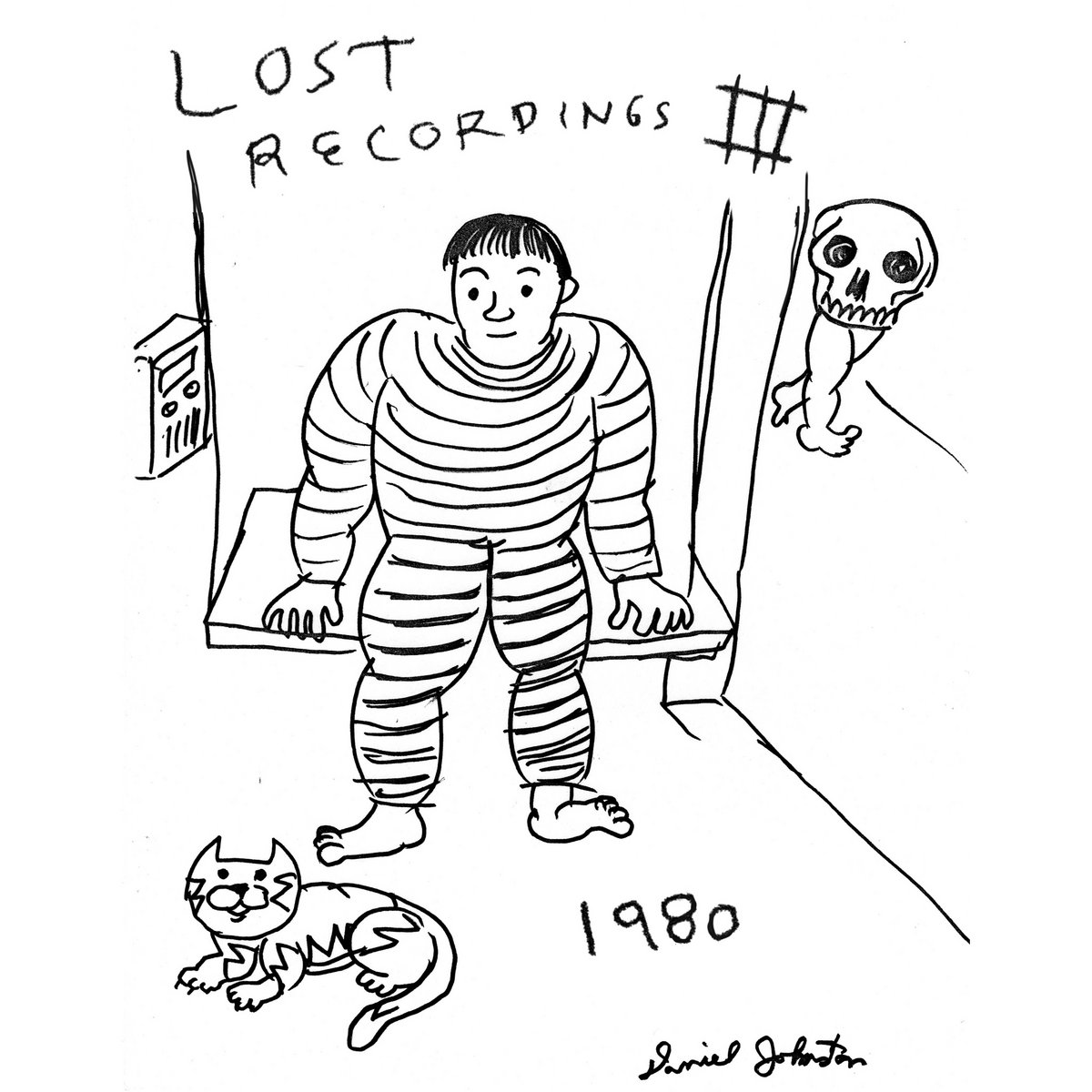
Lost Recordings III (1980)
When Daniel left Austin in February 1987 he was in a bad state of mind. After retiring from the music business and returning to his parents’ home in West Virginia he would spend the next several months in bed medicated and depressed. As an ode to his hero John Lennon’s “Lost Weekend” he would later refer to this period as his “Lost Year.” By the beginning of 1988 he had begun to feel better. The happening UK label Blast First (whose roster included Sonic Youth, The Butthole Surfers and Big Black) was planning to release Hi, How Are You on vinyl that summer and he was taking an interest in music again. He was calling and writing letters on a regular basis and soon we were making plans to promote the record release. But what he wasn’t doing was writing or creating new music on the family piano where he had previously composed and recorded much of his best work. That changed one day when he looked under the bed and found a shoebox full of cassettes that have come to be known as The Lost Recordings. There were six tapes dating from 1980 – 1983 and he was excited by what he heard. He wasn’t so interested in releasing them right away, but they inspired him to start playing and writing again. “I swear when I listen to these tapes I get a Deja-Fu [sic], and I can remember the moment and the melodies. Every time! It’s uncanny!” By late 1991, Daniel had moved back to Texas along with his parents and soon afterward he would be residing at Austin State Hospital where I was able to visit daily. One day he asked what I had done with The Lost Recordings cassettes and suggested that I compile a couple of new cassette releases. This led to the simultaneous 1992 release of The Lost Recordings I and II on Stress Records. And now, 32 years later, I’m proud to have worked on a couple of new releases – The Lost Recordings III and IV. The Lost Recordings III is the only release in the series that’s been left exactly as Daniel recorded it. The other tapes all contained glitches and audio problems that required some material being cut. This is pre-Songs of Pain early Dan still searching for his footing as a songwriter while showing flashes of genius and paying tribute to some of his favorites. He covers Lennon-McCartney, Neil Young and Paul Simon while doing his best Bob Dylan on “Ballad of a Teenage Acid Queen.” I hope these songs provide you with as much pleasure as they’ve provided me. Jeff TartakovStress Records credits released November 1, 2024 All songs written by Daniel Johnston except where noted. Additional guitars and vocals by Tom Gruda, Sr. Remastered in 24-bit Lossless Audio from the original source tapes by Kramer (Shimmy-Disc founder and longtime collaborator of Daniel Johnston). Lost Recordings III (1980) by Daniel Johnston
November 1, 2024
December 6, 2024
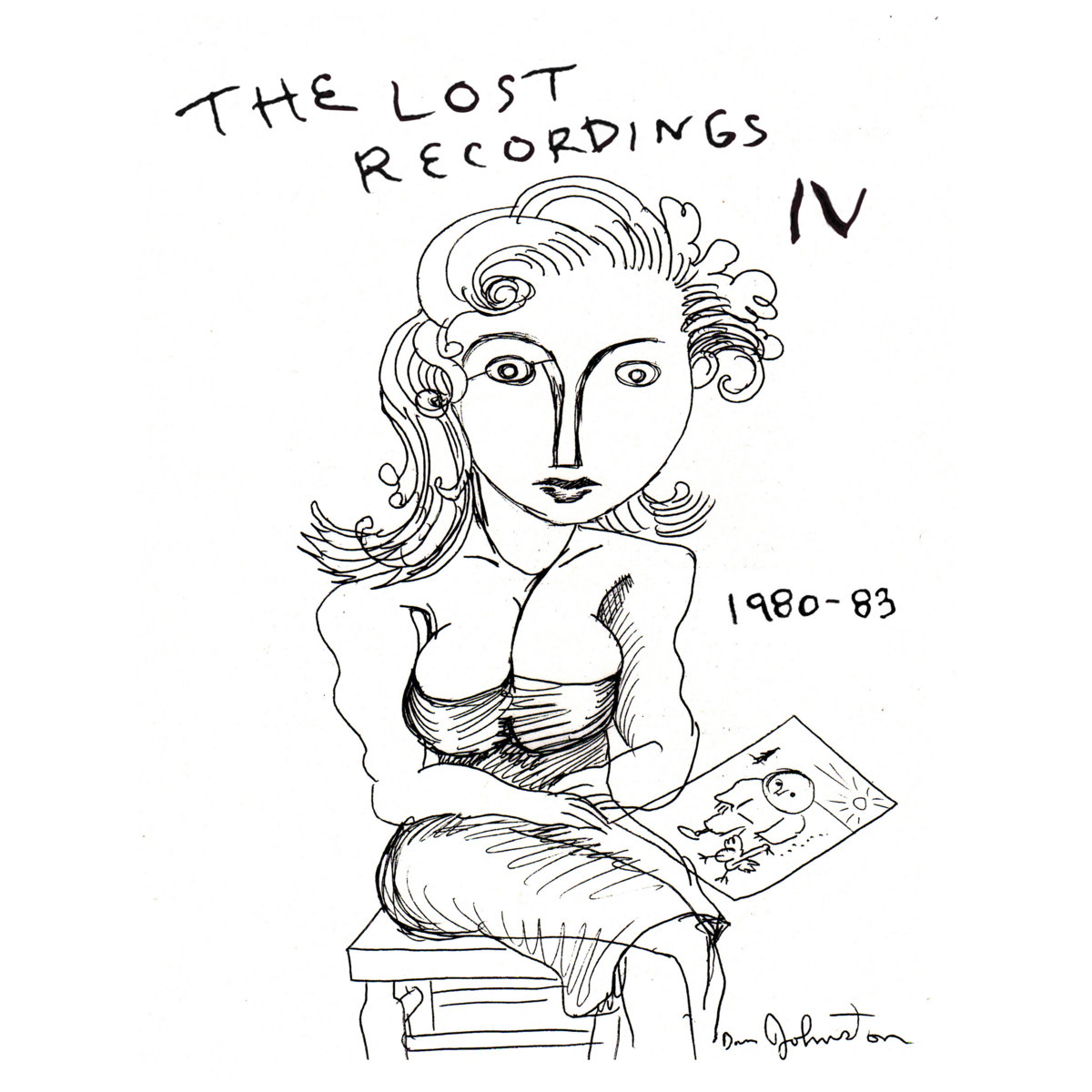
Lost Recordings IV (1980-1983)
“Dear Jeff, Well, here’s another issue of ‘The Lost Recordings.’ I swear when I listen to these tapes I get a deja-fu, and I can remember the moment and the melodies. Every time! It’s uncanny! I went up to the house today and banged on the piano. I can still make up melodies but the words aren’t coming quite yet. From listening to these tapes you can really tell just how in love I really was! I’d think about her all the time, romantically at the piano! It’s really what my music was all about. Before I left West Virginia I decided to rap it all up with a final batch of songs. I feel like I haven’t even started doing music yet. As if all the past I was just practicing. Now I’m ready to really do it and make albums and stuff. Well, until next time this is your friend and mine wishing you the best.” -Daniel Johnston credits released December 6, 2024 All songs written by Daniel Johnston except where noted. Additional guitars and vocals by Tom Gruda, Sr. Compiled by Jeff Tartakov in September, 2024. Remastered in 24-bit Lossless Audio from the original source tapes by Kramer (Shimmy-Disc founder and Daniel’s longtime collaborator) Lost Recordings IV (1980-1983) by Daniel Johnston
December 6, 2024
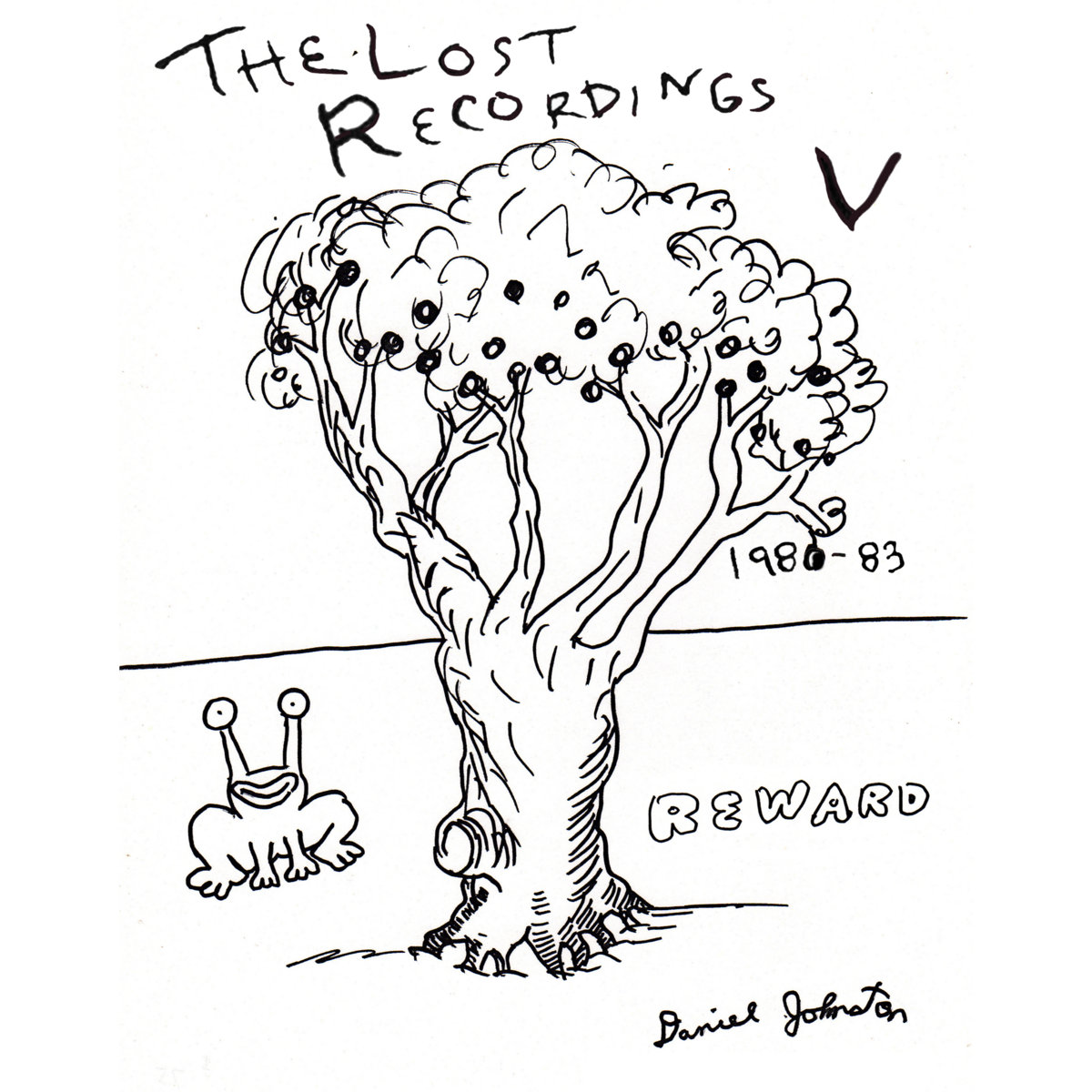
December 18, 2024
Lost Recordings V (1980-1983)
As one superfan to another it has been my absolute pleasure and honor to work with Jeff Tartakov, Kramer, and The Daniel Johnston Trust to bring you such a special collection of unreleased Daniel Johnston songs on Bandcamp. Not only is this a reward for our loyalty as listeners, but a now-fulfilled wish of Daniel himself.– Don Goede of The Johnston Group & E.Y.E. Records credits released December 18, 2024 All songs written by Daniel Johnston (except track 20)Additional guitars and vocals by Tom Gruda, Sr.Compiled by Jeff Tartakov September 2024 Remastered in 24-bit Lossless Audio from the original source tapes by Kramer (Shimmy-Disc founder and longtime collaborator of Daniel Johnston). Lost Recordings V (1980-1983) by Daniel Johnston
December 18, 2024